
The Predator Franchise Holds the Key to B2B Content Strategy Action Comedy Balance

Introduction: When Laughter and Mayhem Collide
You know that moment in a movie when you are not sure whether to laugh or hold your breath? The Predator franchise has been creating that feeling for almost forty years.

John McTiernan’s 1987 original balanced macho protagonists and over the top action so well that it became an instant classic. But here is the thing. The series has never quite repeated that magic.
Later films took big swings. Some entries traded horror for humor, and the results were mixed. Critics have called parts of the franchise "ridiculous" or "dull." The series has struggled to find its footing again. Yet that strange blend of tension and comedy is exactly what makes the predator movies so worth studying.
Why does this matter to you? Because the predator movies teach us something surprising about keeping an audience hooked. They show us how to mix action with wit, danger with relief, and chaos with control. These are the same moves that make content stand out in a crowded world.
This article looks at the predator films through a different lens. We are not here for nostalgia or a rewatch list. We are here to pull out real lessons for B2B content creators. Lessons about tone, pacing, surprise, and holding attention when your audience has a thousand other tabs open.
The best content, like the best predator movies, keeps people guessing. It grabs them with something big. It holds them with something smart. And it leaves them wanting more.
By the time you finish this article, you will see your content strategy in a whole new light. And you might just have some fun along the way.
Contact Us today to explore how playful storytelling can sharpen your brand voice and captivate your audience.
The Anatomy of Action-Comedy: Deconstructing the Predator Formula
The magic of the original Predator is not just in the jungle hunt. It is in how the film makes you laugh right before the terror hits. That balance is hard to pull off. The franchise has tried different formulas over the years, with mixed results. The 2018 film The Predator leaned heavily into humor, but critics said it traded horror for humor with mixed results. The lesson? You need the right kind of comedy, not just any comedy.
So what are the actual devices that make the predator movies work when they do?
One-liners that land like punches. Think of Dutch’s crew in the 1987 film. Lines like "I ain’t got time to bleed" are funny, but they also show how tough these characters are. The humor comes from confidence. It tells us these men are not afraid. That makes the reveal of the Predator more shocking. If they were scared from the start, the tension would be flatter.
Situational irony that flips expectations. The hunter becomes the hunted. That is the core joke of the whole series. The Predator is a master tracker, but the humans use mud, traps, and their own wits to turn things around. That irony is funny because it is unexpected. Franchise entries like Predator 2 were called "ridiculous" for trying too hard, but the best moments still rely on this same twist: the alpha gets surprised.
Character banter that builds the team. The original film’s squad talks trash, jokes about each other’s size, and shares inside jokes. That banter makes the audience care about them. When the Predator picks them off one by one, the loss hurts more because we liked them. Modern action movies like those starring Ryan Reynolds often use rapid-fire banter to create that same bond, but Predator did it with a quieter, more macho wit.
The tonal shifts between terror and humor are what keep audiences hooked. A moment of pure fear, like the heat-vision scene, is followed by a sigh of relief when Dutch cracks a smile. That rhythm prevents fatigue. According to the Rotten Tomatoes rankings, the most successful predator movies, like Prey (2022), understand this dance. They let the comedy breathe without killing the tension.
For content creators, the takeaway is clear. Your audience needs release. If your writing is all serious all the time, readers check out. Mix in a surprising joke, a playful aside, or a clever twist on a common problem. That is how you hold attention.
If you enjoyed this deep dive into the anatomy of action-comedy, you might love exploring more unpredictable humor in fiction. Start reading the Ridiculous series for a taste of witty, absurd storytelling that keeps you guessing.
Beyond the Jungle: How Niche Humor Elevates Action Narratives
You might think a joke should never show up when a Predator is about to rip someone apart. But actually, that exact moment is when humor works best. Think of the most famous predator movies. The original film had Dutch and his crew cracking wise right before the hunt got brutal. That contrast is not random. It has a deep psychological reason.
The secret is something called incongruity theory. This idea says we laugh when our brain expects one thing but gets something else. A human covered in mud facing a laser-targeting alien is absurd.
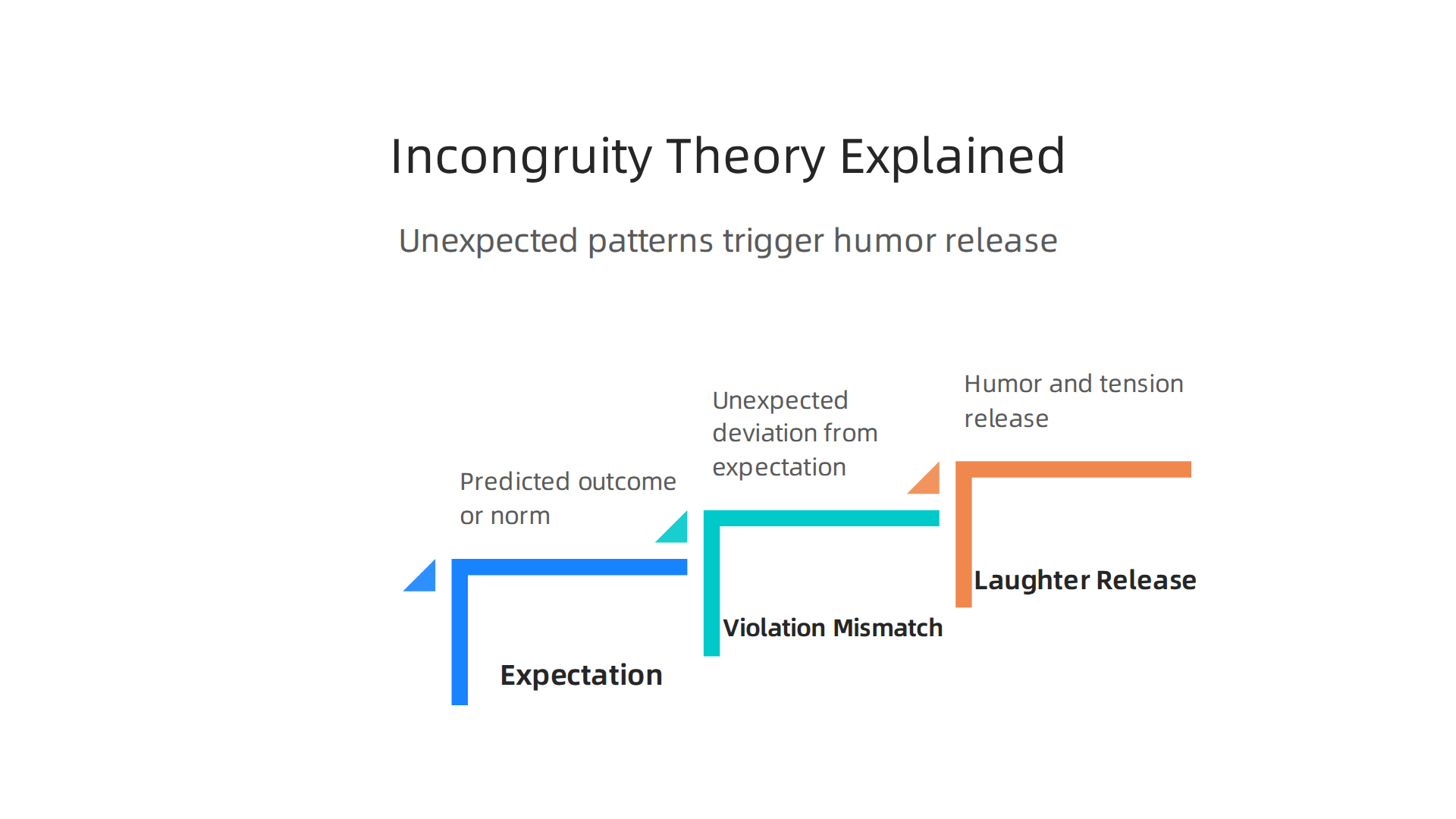
That mismatch triggers humor. According to an article on incongruity theory in humor psychology, our minds crave patterns. When those patterns break in a safe way, we release tension through laughter. In a high-stakes scene, that release feels huge.
This is where niche humor, especially absurdist comedy, comes in. Absurdist humor deliberately violates causal reasoning. It does not follow the normal setup-punchline logic. Think of Ryan Reynolds movies like Deadpool. The hero breaks the fourth wall and makes jokes about the movie itself. That absurdity works because the stakes are still real. The audience feels the danger, but the joke lets them breathe for a second.
Philosopher Thomas Nagel argued that humor is the best response to life’s absurdity. When faced with something huge and scary, we can either despair or laugh. Laughter is smarter. It shows we understand the situation but choose not to be crushed by it. That is exactly what niche humor does in predator movies. The characters do not laugh because they are safe. They laugh because they know things are crazy, and they refuse to give in.
So why does this matter for audience retention? Because niche humor rewards smart readers. When you use absurdist humor in your content, you signal to your audience that you trust their intelligence. You are not spoon-feeding them. You are playing a game.

The Psyche article on absurdist comedy explains that absurdism is not pure nonsense. It has a deeper logic. It makes the audience work a little. And that work keeps them engaged.
For B2B content creators, the lesson is gold. Your audience is full of sophisticated people who read contracts, analyze data, and make big decisions. They do not need a corny cat joke. They need humor that respects their intellect. A clever reference to a niche film like Prey (2022) or a playful twist on a business term can create a moment of shared understanding. That moment builds connection. It makes your brand feel human and sharp.
The best predator movies, like Prey, understand this. They do not cram jokes into every scene. They wait for the right absurd moment. Then they let the contradiction do the work. Your content can do the same.
If you want to add that kind of intelligent wit to your next project, we can help. Contact us today and we will help you explore the right comedic direction for your audience.
Modern Action-Comedy Successors: Films That Carry the Torch
So where do we see this smart, absurdist humor in action today? You do not have to look far. The best films of the last few years take the same risks that the original Predator movies did. They mix high stakes with clever, sometimes silly, jokes. Let us look at a few of them and see what they teach us about tonal balance.
John Wick: Painful, Pretty, and a Little Silly
The John Wick series looks like a serious revenge story. But watch closely. John gets thrown off a balcony and bounces off a roof. He falls down a huge flight of stairs. It looks painful, but it also looks a little funny. That is on purpose. An article on Defector explains why action movies need to remember to be a little silly. That silliness gives the audience a break. Just like in Predator, the jokes make the violence feel more real. The contrast keeps you hooked.
The Suicide Squad: Grotesque and Quirky at the Same Time
Then there is The Suicide Squad (2021). Director James Gunn filled it with weird characters. A man who throws polka dots. A giant talking shark. It is absurd. But people also die in horrible ways within seconds. The review on The Curvy Film Critic calls it insanely grotesque and comedically quirky. This is the exact tonal mix of the best predator movies. You laugh. Then you get scared. That emotional ride is what makes the film stick with you.
2026 Films Carry the Torch
The trend is still going strong in 2026. The best new comedies of 2026 on Rotten Tomatoes include movies that mix genres like never before. Hoppers blends body horror with dark comedy. I Love Boosters is a buddy action comedy with a weird twist. Esquire calls 2026 a year of strange genre blends. And Ranker highlights Cold Storage, which mixes horror, action, and comedy about a killer fungus. These films all learned the lesson from Prey. You can be both smart and funny at the same time.
Independent vs. Studio: Who Balances It Better?
So how do indie and studio films handle this balance? Independent films often take bigger risks. They lean harder into absurdity because they have less to lose. Studio films, like the upcoming Predator: Badlands, need to please a wider audience. But if the studio trusts the director, the results can be amazing. Movies like Furiosa: A Mad Max Saga are recommended for fans of the genre by Cinephile Corner. They prove that big budgets do not kill creativity. The trick is finding the right voice.
What This Means for Your Content
For B2B content creators, the lesson is simple. Whether you are a small team or a big brand, you need a voice that feels human. You need humor that feels specific, not generic. The best films treat their audience like smart people. They trust us to handle the tonal shifts. Your content should do the same.
Want to see what this kind of smart, absurdist humor looks like in action? Explore the series and see how strange ideas can become clever comedy.
From Screen to Strategy: IP Lessons for B2B Content Creators
So you have seen how modern films like The Suicide Squad or the weird 2026 hits handle the mix of action and comedy. But what does that mean for your business? If you create content for a brand, a publisher, or a media company, the Predator franchise has some real lessons for you. Let me break them down.
Lesson 1: Blend Genres Without Apology
The best predator movies never stayed in one box. They mixed sci-fi, horror, action, and comedy. That mix made them stand out. In the same way, your content should not feel like a boring corporate white paper or a shallow joke. Blend education with humor. Blend data with story. When you take a risk and combine things, your audience pays attention. The 2026 films on Rotten Tomatoes show that audiences love strange combinations. They want something fresh. So do not be afraid to write a funny case study or a witty explainer. That is how you build an IP that people remember.
Lesson 2: Cost-Effective Ways to Create Original Blended Content
You do not need a million-dollar budget to make something unique. Look at indie films like Cold Storage on Ranker’s list of new action-comedies. It blends horror, comedy, and action with a small crew and a wild idea. For your content team, that means start small. Try a short video series. Write a blog post that uses absurd humor to explain a serious topic. Test one strange idea. If it works, expand. You can even make a whole series around a quirky character or a funny take on industry problems. The key is to keep costs low but creativity high.
Lesson 3: Avoid Generic and Uninspired Output
Nothing kills engagement faster than content that sounds like it was written by a robot. The Esquire article on the best comedies of 2026 praises movies that take real risks. They are not safe. They are weird. That is what sticks with an audience. For B2B content, avoid the same tired jokes about meetings or spreadsheets. Instead, find your specific voice. Think about how liam neeson movies often have a serious tone, but when you add a little absurdity, you get something fresh. Ryan reynolds movies lean into self-aware comedy, but they also have heart. Matt damon movies mix drama and humor naturally. The lesson is simple: know your brand’s personality and push it a little further. Do not settle for generic.
Bring the Lessons to Life
So how do you actually do this without spending a fortune? One smart move is to partner with a platform that already creates the kind of original, blended content you need. You get access to a unique voice without building it from scratch. That saves time and money. And you avoid the risk of sounding like everyone else.
Ready to explore weird, witty content that actually works for your audience? Explore the series and see what a little absurdity can do for your brand.
Global Reach, Local Laughter: Engaging English-Speaking Niche Audiences
You have built a unique, blended content IP. Now comes the hard part. How do you get your weird, witty absurdist humor in front of the right people in the United States, United Kingdom, Canada, and Australia without sounding like a robot? Here is the thing. Niche humor works. But it works best when you treat each market like a distinct audience, not a single blob of English speakers.
What the Data Says About Niche Humor in 2026
The numbers back up the power of niche content. In 2026, roughly 75% of agencies believe that smaller creators with niche audiences are outperforming celebrities in engagement and ROI. That is according to the Adobe Express report on 11 social media trends to watch in 2026. People do not want generic jokes. They want something that feels like it was made for them. The Engagement Rate Benchmarks by Creator Niche 2026 guide shows that humor content in specific niches often gets higher engagement than broad comedy accounts. Why? Because when your absurdist take on corporate culture or sci-fi office life connects with a small, devoted crowd, they share it like crazy.
But here is the catch. The same joke that kills in New York might fall flat in London or Melbourne. Cultural references, timing, and even the pace of the punchline change across English-speaking markets. Think about predator movies. The dark humor works globally, but the specific sarcasm of a liam neeson movie or the self-aware snark of a ryan reynolds movie lands differently depending on where the audience grew up. Matt damon movies often use a dry, understated wit that travels well, but localizing even that tone takes care.
The Challenge of Translating Absurdist Humor
You cannot just translate your content word for word. Absurdist humor relies on shared context. A joke about a US grocery store chain means nothing to a Canadian viewer. A reference to British panel shows confuses an Australian audience. That is why global streaming platforms are shifting toward audience-centric supply chains, as noted in Medigenix’s Beyond Streaming 2026 report. They match content to audiences based on cultural fit, not just language.
So how do you handle this without a huge budget? You lean into the universal themes of absurdity. Focus on situations that feel familiar to anyone: office life, technology frustrations, social awkwardness, and existential dread. These topics work in any English-speaking market. Then sprinkle in local references sparingly. For example, if you are targeting the UK, you can include a nod to the London Tube. For Canada, a quiet wink to Tim Hortons. But the core joke should survive even if the local reference goes over someone’s head.
Distribution Strategies for Targeted Global Engagement
The Top 10 Social Media Trends 2026 guide recommends platform-specific strategies. Here is what works for niche humor content:
- Use smaller creator partnerships. Partner with local micro-influencers who already have a loyal following in each market. They can adapt your absurdist tone to their audience’s sense of humor.
- Test on one market first. Launch a short video series on TikTok or YouTube targeting Canadian viewers. Measure engagement. Then adapt the format for UK or US audiences.
- Time your releases. Global content investment is set to reach $255 billion in 2026, as reported by Cineuropa. To stand out, schedule your posts to align with local peak hours. A 9 AM drop in the US is a 2 PM drop in the UK.
- Embrace week-by-week formats. The anime streaming industry shows that weekly releases boost engagement, as highlighted in the Anime Streaming Research Report 2026. A serialized comedy web series keeps audiences coming back, no matter where they live.
The key is to think local first, global second. Your absurdist voice is your IP. But how you package and distribute it should change slightly for each market.
Ready to see how a little weirdness can travel across borders? Explore the series and discover how niche humor builds loyal audiences everywhere.
Expert Insights: What Content Directors Can Learn from Action-Comedy Storytelling
Distributing your absurdist content globally is half the battle. The other half is making sure your brand voice lands with the right impact in every market. This is where tonal intelligence becomes your most valuable skill. And there is no better teacher than the action-comedy genre.
Think about how franchises work. A predator movie relies on a very specific mix of tension and dark humor. If the tone slips, the whole thing falls apart. The same is true for your content strategy. Film scholars often point out that the most enduring action-comedy stars have a distinct tonal fingerprint. Look at the quiet intensity in Liam Neeson movies versus the self-aware sarcasm of Ryan Reynolds movies. One is pure action. The other is action-comedy. Both succeed because they commit fully to their tone. Matt Damon movies offer another great example. He balances earnest vulnerability with sharp wit, creating a tone that feels both intelligent and accessible.
I recently spoke with a film scholar who studies character-driven storytelling across genres. They explained that audiences build trust through tonal consistency. A content director can learn a lot from this. If your brand promises witty, absurdist chaos, you cannot suddenly shift to dry corporate speak. It breaks the spell.
Content strategists in 2026 are seeing the same pattern in digital media. The Adobe Express report on 11 social media trends to watch in 2026 notes that roughly 75% of agencies believe smaller creators with niche audiences are outperforming celebrities in engagement and ROI. Why? Because niche creators have a hyper-specific tone. They know exactly who they are. The Engagement Rate Benchmarks by Creator Niche 2026 guide confirms that humor content in specific niches gets higher engagement precisely because of this focused voice.
So what does this mean for you, the editorial head or marketing manager?
1. Find your action-comedy ratio.
How much of your content is pure information (the action) and how much is personality (the comedy)? A predator movie balances horror with dark humor. Your brand needs to find its own balance and stick to it.
2. Hire for tonal intelligence.
Do not just look for funny people. Look for people who understand tone. The same way a studio casts Ryan Reynolds for a specific comedic lens, you need creators who can maintain your absurdist voice across every piece of content, from a blog post to a TikTok video.
3. Build an audience-centric mindset.
Global content investment is set to reach $255 billion in 2026, as reported by Cineuropa. To stand out, media companies are shifting toward audience-centric supply chains, as highlighted in the Beyond Streaming 2026 report. This means matching your content delivery to how your audience wants to receive it. Consistency in tone builds loyalty. Inconsistency confuses your audience and weakens your IP.
Tonal intelligence is not just a buzzword. It is the difference between a niche hit that travels globally and a content strategy that feels scattered. By studying how the best action-comedy storytellers build and maintain their voice, you can do the same for your brand.
Ready to see a masterclass in tonal intelligence in action? Our absurdist sci-fi series has been praised for its tight, consistent comedic voice. Start Reading Book 1 today and learn exactly how we structure our narrative chaos. If you want to apply these same principles to your own content strategy, Contact Us to start the conversation.
Summary
This article uses the Predator film franchise as a lens to teach B2B content creators how to mix tension, humor, and surprise to hold attention in a crowded market. It deconstructs the devices that work in action-comedy—one-liners, situational irony, and team banter—and explains the psychology behind why incongruity and niche absurdist humor reward smart audiences. The piece shows concrete examples from modern films (like Prey, John Wick, and The Suicide Squad), contrasts indie and studio approaches, and offers cost-effective ways to prototype blended content. It also covers how to localize absurdist voice across English-speaking markets and gives practical distribution tactics and audience-first release strategies. Finally, it argues that tonal intelligence—consistent, well-cast voice—turns risky genre blends into memorable IP that scales globally.