
How to Train Your Dragon Comedy Techniques Strengthen Your B2B Content Strategy

Introduction
Think about the last time you watched a movie that made you laugh out loud.

Now think about an action movie that did the same. Chances are, the films that blended big thrills with good laughs stuck with you longer. That is not an accident. Humor is one of the most powerful tools in animated action films, yet it is often overlooked by content creators who focus only on spectacle or drama.
Here is the thing: when done right, comedy does more than just get a chuckle. It builds emotional connections between the audience and the characters. It makes the stakes feel real and the victories more satisfying. For animators, mastering techniques like timing, exaggeration, and visual gags is what separates forgettable scenes from unforgettable ones. Resources like Animation for Comedy break down exactly how these elements work, showing that humor is actually a craft with rules you can learn.
So what does this mean for B2B content creators? A lot. Understanding the mechanics of film comedy can unlock fresh strategies for producing content that stands out. Instead of dry explainers or generic listicles, you can use humor to grab attention, reduce friction, and build trust with your audience. The same principles that make a cartoon dragon funny can make your brand more relatable.
That is where the How to Train Your Dragon franchise comes in. Over three animated films and a 2025 live-action remake, these movies have shown us how to blend whimsy, heart, and action into a seamless experience. They are not just great examples of best action movies of all time; they are masterclasses in using humor to drive engagement. Whether it is Toothless’s playful eye movements or Hiccup’s awkward one-liners, every joke serves the story and deepens our emotional investment.
The franchise proves that even high-stakes dragon battles need a little silliness to feel human. That is a lesson any content strategist can use. For more on how action stars teach comedy techniques, check out how Hollywood action stars master these principles.
In this article, we will break down the exact comedy mechanics that make the How to Train Your Dragon movies work so well. Then we will show you how to apply those same techniques to your own B2B content strategy. Let’s dive in.
The Role of Humor in Animated Action Films
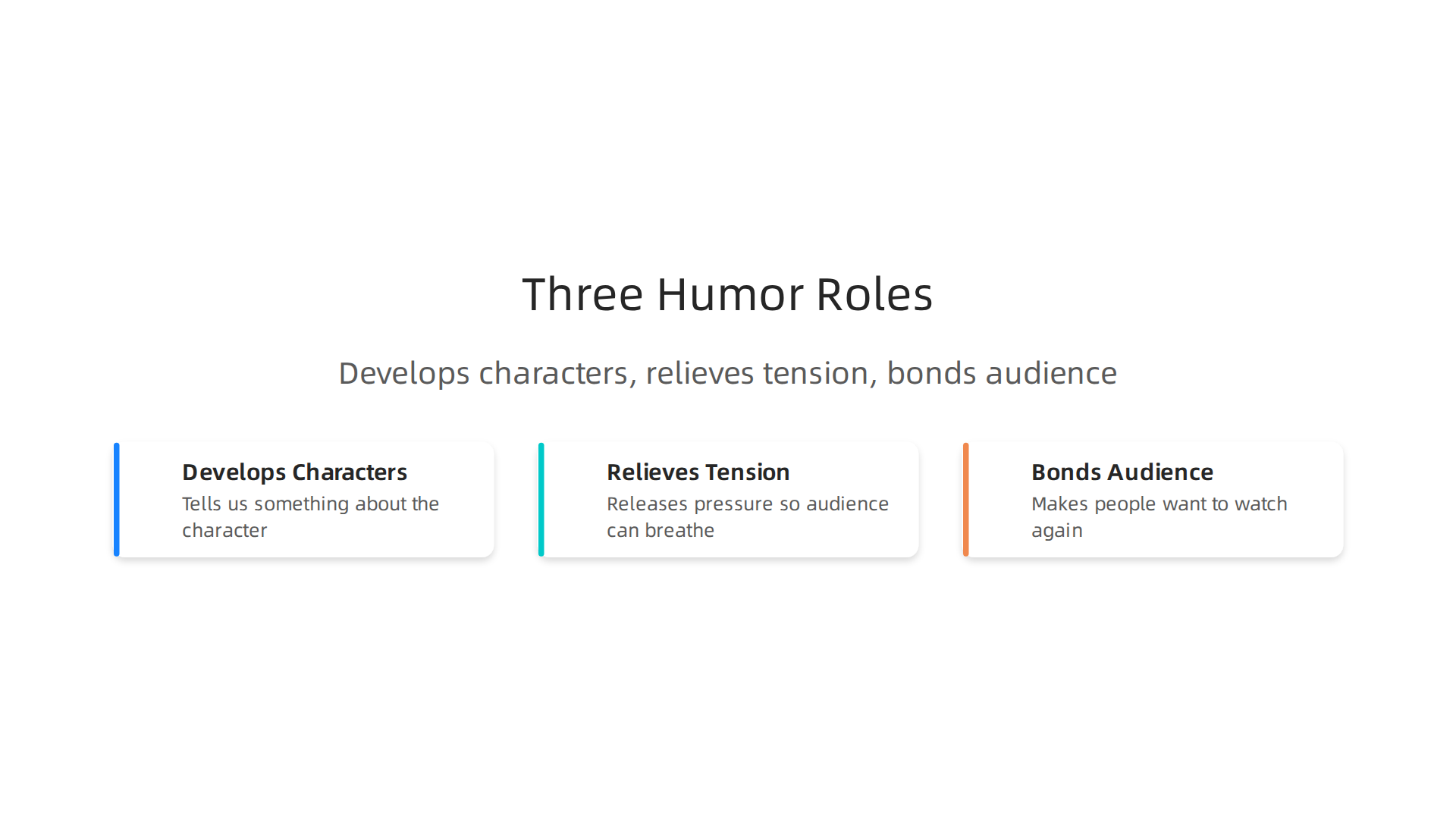
So why does comedy matter so much in a genre built on dragons, battles, and high stakes? The answer is simpler than you might think. Humor does three specific jobs in animated action films: it develops characters, relieves tension, and bonds the audience to the story.
Without it, even the most exciting action scene can feel cold and distant.
Think about the how to train your dragon movies for a second. The best jokes do not just land for a quick laugh. They tell us something about the character. When Hiccup stumbles through his first attempt at training a dragon, the physical comedy is funny. But it also shows us he is clumsy, curious, and brave enough to keep trying. That is the secret. According to experts at Animation for Comedy, exaggeration and timing turn simple actions into meaningful character moments. A well-timed stumble can tell a whole backstory.
Humor also works as a pressure valve. Action scenes in the best action movies of all time often build tension until it feels unbearable. Then a quick visual gag or a sharp line of dialogue releases that pressure so the audience can breathe. The trick is balance. Too much comedy and the stakes feel fake. Too little and the film becomes exhausting. That is where physical comedy, witty dialogue, and situational irony come into play. Each one serves a different purpose, but they all help keep the audience engaged without burning them out.
There is real data behind this too. Films with strong comedic elements consistently score higher in rewatchability and attract broader demographic audiences. A well-placed laugh makes people want to watch a scene again. It also helps bridge different age groups and cultures. The same joke that lands with a teenager can also land with their parents, as long as the timing and context are right. For more on how these mechanics work in practice, check out humor writing techniques for animation success.
Here is what this means for B2B content creators. If you want your audience to remember your message, you need to give them moments of lightness. You need to relieve tension with humor, just like animated action films do. The mechanics are the same, whether you are writing a blog post, a video script, or a social media campaign. If you are curious about how other Hollywood stars use these principles to strengthen their own content strategies, take a look at how Hollywood action stars master these comedy techniques.
Next, we will look at the specific comedy mechanics from the How to Train Your Dragon franchise and break down exactly what makes them work so well.
How to Train Your Dragon: A Case Study in Whimsical Comedy
What does this look like in practice? The how to train your dragon movies are the perfect case study because they master something many action films miss. They use comedy not as a break from the story, but as the engine of the story itself.
Character Humor That Builds Emotional Stakes
Hiccup’s awkwardness is the main source of comedy in the first film. He is an undersized teen in a village of brute Vikings who would rather fight dragons than befriend them, as noted in the film’s synopsis on Wikipedia. Every stumble and every failed attempt to fit in is played for laughs. But it also builds our emotional connection to him. We root for him because we have all felt like outcasts.
Then there is Toothless. The dragon acts just like a playful cat. He mimics Hiccup’s movements, chases his own tail, and looks up with those big green eyes. This visual humor between the two characters does not just make us laugh. It sells their unlikely friendship. Unlike many best action movies of all time that rely on tough-guy one-liners, the humor here comes from pure vulnerability.
Subtle Gags That Reward Repeat Viewings
The franchise also rewards fans who pay close attention. The animators packed the world of Berk with subtle visual gags and cultural references that make you want to watch again. The 2025 live-action remake even preserved entire gags and shots because they were so integral to the story. This is a huge lesson for content creators. Give your audience a reason to come back. Hide a detail that only the most loyal fans will catch.
This style of humor stands on its own. It is distinct from the rapid-fire wit in jesse eisenberg movies or the detached irony in bill murray movies. It is rooted in an awkward sincerity that feels both specific and universal. For more on how blending genres can achieve this effect, see our analysis of genre-bending comedy films.
Comedy That Grows Up With Its Audience
One of the smartest things the how to train your dragon movies do is let the humor mature. The first film is heavy on slapstick. Hiccup falls down. Toothless makes a mess. It is light and fun. As the series goes on, the comedy reflects deeper emotional stakes. According to an analysis of his personal growth, Hiccup’s relationships challenge him. The humor in the later films shifts toward situational irony and mature realizations. Nobody is doing pratfalls at a dragon funeral.
When critics argue that some jokes feel disconnected, like the so-called "Family Guy" syndrome, they miss the bigger picture. The character-driven comedy creates a foundation strong enough to support serious drama. Understanding these mechanics helps you build better content. We often break down how these frameworks work across different genres, like our analysis of the 11 mechanics of humor in Alien movies.
The result is a franchise that feels timeless. The comedy is not just funny. It is meaningful. It evolves. And it makes the action scenes hit even harder. Next, we will look at how an entirely different type of star uses recognizable comedic roles to build a niche that keeps audiences engaged.
Character-Driven Humor: Hiccup, Toothless, and the Gang
So who makes the character-driven humor in the how to train your dragon movies work so well? It starts with Hiccup. He is an undersized teen in a village of brute Vikings who would rather fight dragons than befriend them, as described in the film’s synopsis on Wikipedia. Every time he trips over his own feet or accidentally sets something on fire, we laugh. But we also feel for him. His self-deprecating wit says, "I know I do not belong here." That honesty makes him someone we root for. According to an analysis of his personal growth, Hiccup’s relationships push him to change. The comedy comes from watching a kid who is scared but still tries anyway.
Then there is Toothless. He does not speak a single word, but his face tells you everything. The visual humor between the two characters relies on Toothless rolling his eyes, flicking his tail, or copying Hiccup’s movements. He is basically a giant cat that can fly. That animal comedy crosses all language barriers. You do not need subtitles to understand why Toothless pretending to be a dog is hilarious. It also builds their bond perfectly.
But the humor does not stop with the two leads. The supporting characters in Berk inject their own brand of comedy. Gobber, the one-legged blacksmith, mixes deadpan one-liners with physical humor. He loses a limb in almost every scene, yet he keeps joking about it. The other Vikings, especially Stoick and the gang, bring loud slapstick and verbal jokes that keep the energy high. This variety makes the world feel alive. Every character has a funny side.
This kind of character-driven humor is what separates the how to train your dragon movies from generic action films. It makes the story feel real even when dragons are flying around. For more on how action stars use this same approach to build audience connection, check out our piece on Hollywood action stars teach comedy techniques. The result is a comedy that does not just make you laugh. It makes you care.
Visual Gags and Action Sequences: Balancing Laughs and Thrills
Now let us talk about something the how to train your dragon movies do better than almost any other animated franchise: blending visual gags into high-stakes action scenes without breaking the tension.

This is not easy. Put one joke too many into a dragon fight and the scene turns into a cartoon. Leave them all out and the film feels dry. So how do they pull it off?
The trick lies in the placement of the comedy. During a chase through the sky, Toothless will mimic Hiccup’s exact movements, flapping his wings the same way Hiccup flails his arms. It is a small moment, but it lands perfectly because it happens in a split-second lull between bursts of danger. This is what film editors call using blocking for comedic timing. The way characters move inside the frame turns a simple action into a laugh. But the joke never slows the action down. It just adds a layer of character.
The same principle applies during battle sequences. When the Vikings charge into their first dragon raid, the chaos is real. Yet right in the middle of it, you see Stoick get knocked over by a sheep or Gobber lose his prosthetic leg for the hundredth time. These gags do not feel forced because the timing is precise. As experts at Beverly Boy Productions explain, humor timing relies on pacing dialogue, physical actions, and visual cues so that jokes hit the audience at exactly the right moment. In HTTYD, that moment is almost always just after a peak of tension, giving you a chance to breathe before the next thrill.
Two specific techniques make this work across the entire trilogy. The first is the rule of three. You see a gag once and it is funny. Twice and it becomes a pattern. Three times and it is a full joke. Toothless eating fish in a goofy way is a good example. The second technique is callbacks. A joke that pays off twenty minutes later feels earned. For a look at how other films master this same action-comedy balance, we recommend reading about how the Predator franchise holds the key to action-comedy balance.
When the comedy and action fit together this well, the audience stays engaged. The how to train your dragon movies prove that you do not have to choose between laughs and thrills. You can have both. And that is why these films stand among the best action movies of all time, right up there with classics like jesse eisenberg movies that balance wit with pace or bill murray movies that find humor in the middle of chaos. The key is knowing when to let the joke hit and when to let the action roar.
Cultural and Linguistic Humor in Global Releases
The how to train your dragon movies did not just win over American audiences. They became global hits. And that did not happen by accident. DreamWorks spent real time adapting the jokes for different markets. A pun that works in English might fall flat in Spanish or Japanese. So they changed the dialogue to match each culture’s sense of humor.
Wordplay is hard to translate. But visual gags? Those travel much better. When Toothless mimics Hiccup’s movements or a Viking trips over a sheep, you do not need to speak the language to laugh. That is why the how to train your dragon movies rely so much on physical comedy. It works everywhere. As DreamWorks continues to invest in global audiences, like their upcoming Filipino animated film Forgotten Island set for September 2026, they prove that understanding cultural context is a top priority.
Here is the thing. What one country finds hilarious, another might find confusing. Cultural references, local celebrities, or inside jokes do not cross borders well. But a dragon eating fish in a goofy way? That is universal. For content creators trying to reach a global audience, this lesson is gold. If you want your humor to stick everywhere, use more visuals and less wordplay. That is exactly what the live-action How to Train Your Dragon (2025 film) is doing, reimagining the story for new audiences worldwide.
For B2B content creators, this means thinking about how your jokes will work in different markets. If you are writing for an English-speaking audience only, wordplay is fine. But the moment you go global, shift toward visual and situational humor. Even simple B2B content strategies can learn from how cheesy humor engages wider audiences. The how to train your dragon movies show that a well-timed visual gag can make people laugh in any language. And that is a powerful tool for anyone who creates content.
So the how to train your dragon movies show us that humor works best when it comes from a real place. It comes from character. It comes from timing. And it respects the audience. For B2B content creators in 2026, these same rules can turn boring marketing into something people actually want to share.

Let us look at the three biggest lessons you can steal from DreamWorks.

Lesson 1: Build Your Brand Voice Like Hiccup Built His Character
Hiccup is not the strongest Viking. He is awkward, curious, and a little nerdy. That is exactly why we love him. His humor comes from who he is. It feels real.
Your brand voice works the same way. If you try to be funny without a clear personality, the jokes feel forced. But if you build a consistent voice first, the humor lands naturally. A 2026 B2B marketing humor study shows that funny content works best when it keeps trust and credibility intact. You can be playful and professional at the same time. You just need to know your brand character first. For more on how unexpected character humor builds voice, see how Josh Brolin movies show how dramatic actors master original comedy.
Lesson 2: Visual Gags and Callbacks Make Content Stick
The best action movies of all time mix big moments with small, funny details. In the how to train your dragon movies, you see the same gag repeated. Toothless does that head tilt. Hiccup trips in the same way. These callbacks build inside jokes with the audience.
In B2B content, you can do the same thing. Use a recurring character in your videos. Repeat a funny catchphrase in your emails. The 2026 B2B content playbook mentions that creative videos need to be funny and prove product understanding. A callback does both. It shows you remember your audience. It also rewards loyal readers who notice the joke. This technique is common in jesse eisenberg movies and bill murray movies, where dry, repeating jokes become the funniest parts of the film.
Lesson 3: Respect Timing and Cultural Context
The how to train your dragon movies changed jokes for different countries. They knew a pun in English might confuse a viewer in Japan. B2B buyers are global too. A joke about a specific US office trend might not work for a reader in Germany or Brazil.
The trick is to use situational humor. Jokes about slow software, too many meetings, or complicated spreadsheets work everywhere. Everyone in the B2B world gets it. As Improvado’s 2026 content strategy guide points out, thinking about promotion and audience engagement holistically is key. Sensible timing also means staying away from sensitive topics. When you keep the humor tied to shared work experiences, you stay safe and relatable.
How to Start
You do not need a big animation budget. Start small. Pick one character voice for your next social post. Add one callback to a previous joke in your newsletter. Test what works. The how to train your dragon movies prove that humor builds loyalty when it comes from a real place.
If you want to go deeper on this idea, check out how Hollywood action stars teach the comedy techniques that strengthen your content strategy. It shows exactly how to apply these film lessons to your next campaign.
The Future of Humor in Animated Action Cinema
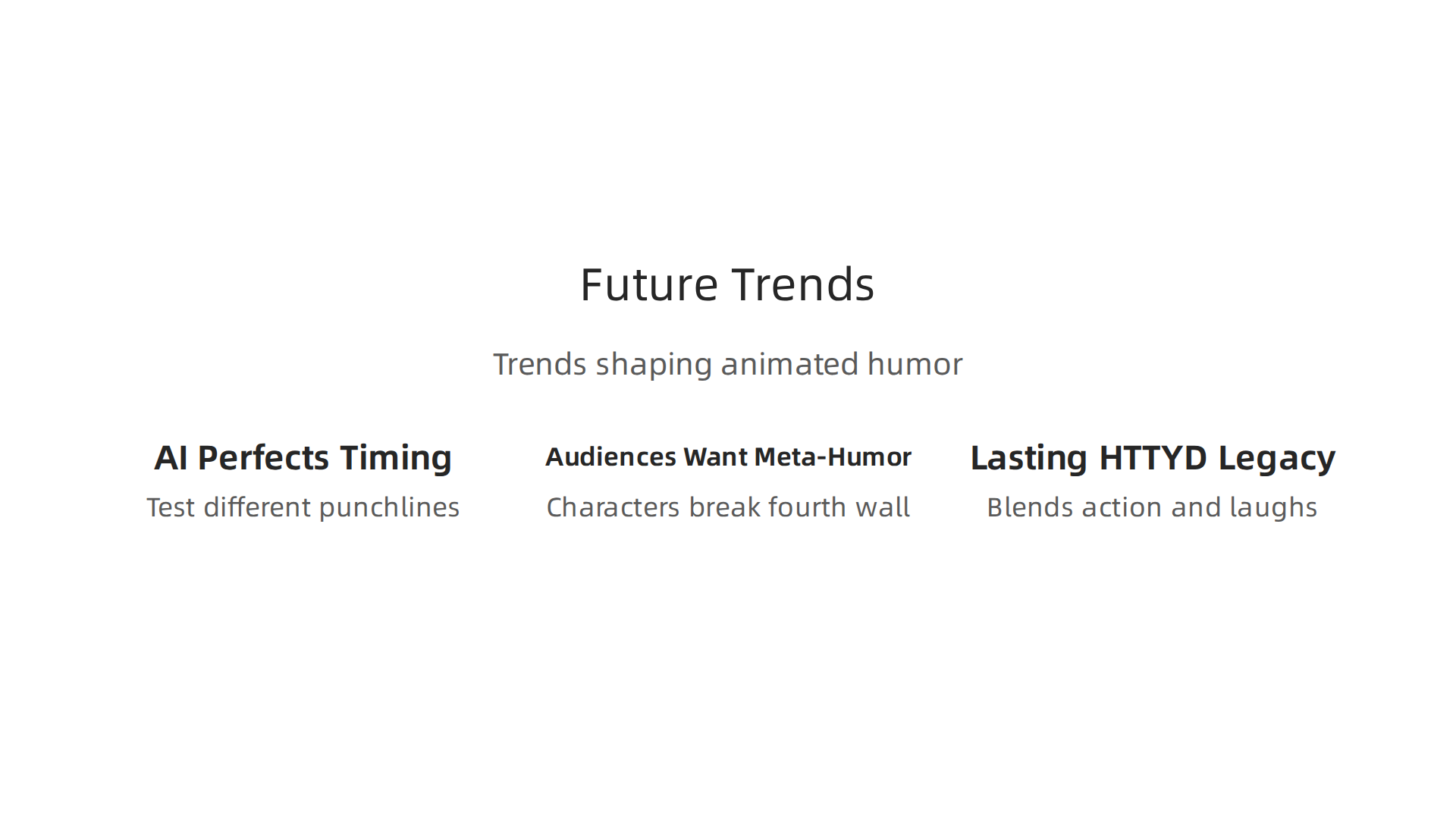
So the how to train your dragon movies taught us that humor works best when it comes from character. But what does the future look like? In 2026, animated action cinema is shifting in some big ways.
And B2B content teams can learn a lot by watching closely.
Trend 1: AI Helps Perfect Comedic Timing
One big change is AI-assisted animation. Studios now use AI to test different punchlines and pauses. They find the exact beat a joke needs to land. This makes humor feel more natural and less forced. For your content, this means you need to test your timing too. A 2026 B2B content playbook explains that the best creative videos are funny and prove product understanding at the same time. You cannot rush the punchline.
Trend 2: Audiences Want Meta-Humor
Viewers in 2026 love smart jokes. They enjoy when characters break the fourth wall. The best action movies of all time use this trick to keep audiences engaged. Think about the dry, deadpan delivery in bill murray movies. Animated films now blend big action scenes with the same knowing winks. This technique works because it treats the audience as smart. For another take on this, check out how josh brolin movies show dramatic actors mastering original comedy.
Trend 3: The Lasting Legacy of HTTYD
The how to train your dragon movies set a new standard. They proved you can have huge action and still make people laugh with small, quiet moments. Newer animated franchises copy this balance. They avoid cheap pop culture jokes. Instead, they use universal situations that everyone understands. This approach builds trust. As one 2026 B2B marketing humor study points out, funny content needs to keep trust and credibility intact. The HTTYD formula does exactly that.
How This Helps Your Content in 2026
The future of B2B content looks a lot like the future of animated cinema.

Audiences want balance. They want smart timing, character-driven jokes, and a story that matters. Forced corporate humor is dead. If you want to learn more about applying these ideas, look at how Hollywood action stars teach the comedy techniques that strengthen your content strategy. It shows exactly how to bring these film lessons into your next campaign.
Summary
This article explains how the How to Train Your Dragon franchise uses humor as a storytelling engine and shows how those same techniques can improve B2B content. It breaks down comedy mechanics—timing, exaggeration, visual gags, callbacks, and character-driven jokes—illustrating how each strengthens character, relieves tension, and increases rewatchability. Using examples from Hiccup, Toothless, and Berk, the piece shows how small, repeatable details and well-placed jokes make action scenes hit harder and build audience loyalty. It highlights cultural considerations for global releases and explains how to translate wordplay into universal visual humor. The article then extracts three practical lessons for marketers: develop a consistent brand voice, use callbacks and visual beats, and respect timing and cultural context. It ends with pragmatic starting steps and notes on future trends like AI-assisted timing and meta-humor, giving content teams actionable ways to make marketing both credible and entertaining.