
John Travolta Comedic Roles Reveal the Formula for Niche Humor That Works

Introduction: Why John Travolta’s Comedic Roles Hold the Blueprint for Niche Humor
You know the feeling. You scroll through blog after blog, social post after social post. Nothing makes you laugh. Everything feels safe. Generic. Forgettable.
Here is the thing. Your audience feels the same way. They are tired of cookie-cutter humor that tries to please everyone. They want comedy that surprises them.

Comedy that feels personal. Comedy that shows your brand understands them on a deeper level.
This is not just a hunch. The 2026 Social Trends Report from Ogilvy says the next big shift in content is about creating work that "earns attention, cultivates intimacy, and carries emotional substance".
Most content mills miss this completely. They avoid risk. They play it safe. And their humor falls flat.
So where do you look for inspiration? Start with one of the most surprising comedy careers in Hollywood.
John Travolta movies cover a wild range of comedic styles. From the warm, sitcom charm of "Welcome Back, Kotter" to the over-the-top absurdity of "Look Who’s Talking" and beyond. Travolta has proven that comedy works best when it takes a specific point of view. He does not try to be funny for everyone. He commits to the weirdness of each role.
That is exactly the kind of thinking your content team needs.
In this article, we break down seven iconic John Travolta movies and pull out real, actionable lessons for developing a unique comedic voice.
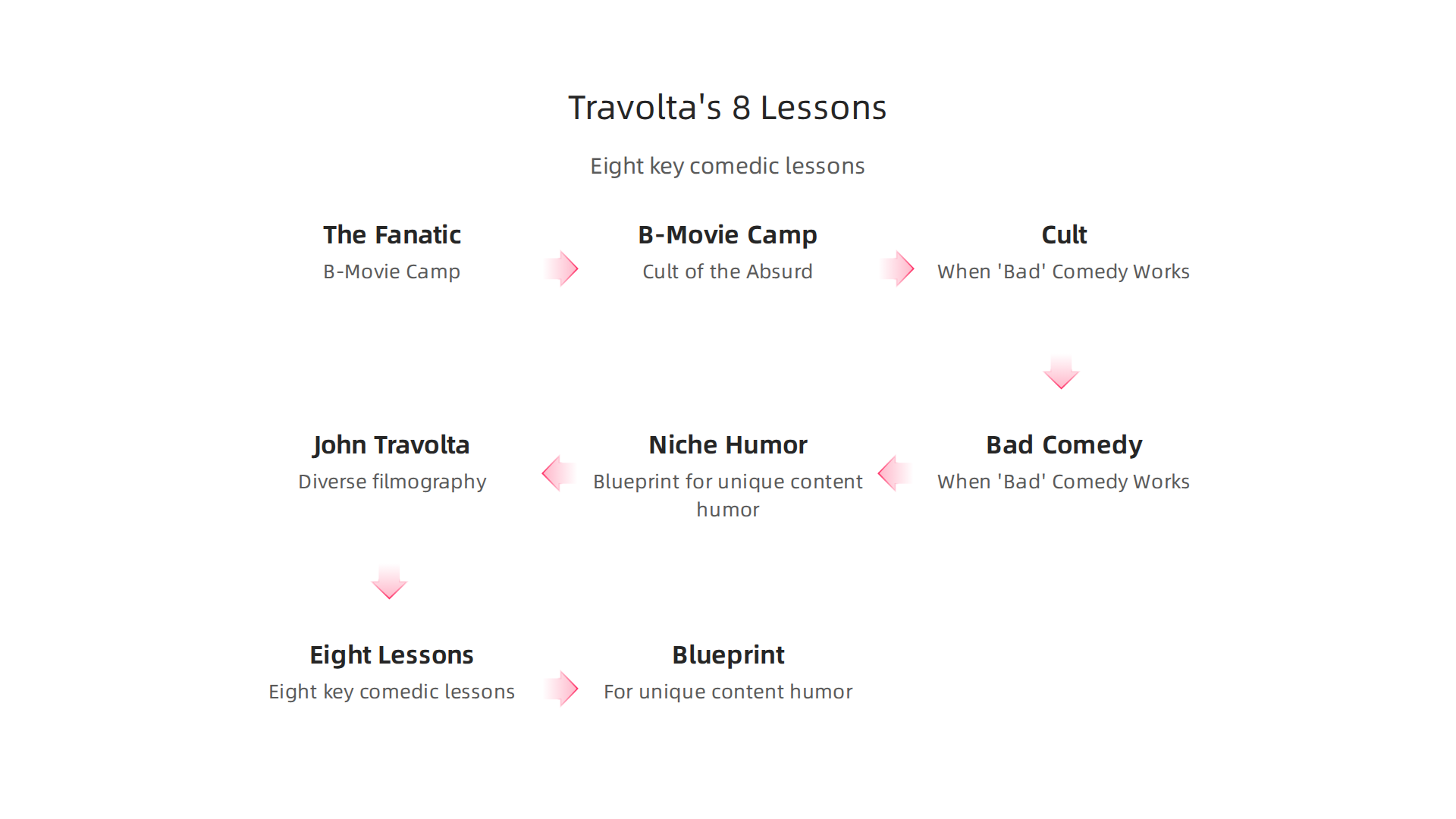
These are not generic tips. Each lesson comes from watching how Travolta navigates tone, timing, and the fine line between clever and silly.
If you have already explored how other actors shape comedy like our deep dive on Anna Kendrick movies and how the Predator franchise balances action with humor, you know there is plenty to learn from film. This article builds on that same idea.
Ready to move beyond boring humor? We can help. Contact us today to find the right comedic direction for your next project.
1. The ‘Welcome Back, Kotter’ Era: How a Sitcom Foundation Built Travolta’s Comic Timing
Before John Travolta became the dance floor king in "Saturday Night Fever," he was Vinnie Barbarino. That role on "Welcome Back, Kotter" (1975-1979) gave him something priceless: a live audience to play off of every week.
Here is what most people miss. Sitcoms like Kotter forced actors to deliver lines with perfect rhythm. You had to pause at the exact right moment. You had to let the laughter breathe. Then hit the next beat without rushing. According to Britannica, Travolta became a cultural icon during this period, and that started with his sitcom timing.
So how does this help you as a content creator?
Think about it as "rehearsed spontaneity." The jokes on Kotter looked off-the-cuff. But they were practiced, refined, and tested in front of a real crowd.
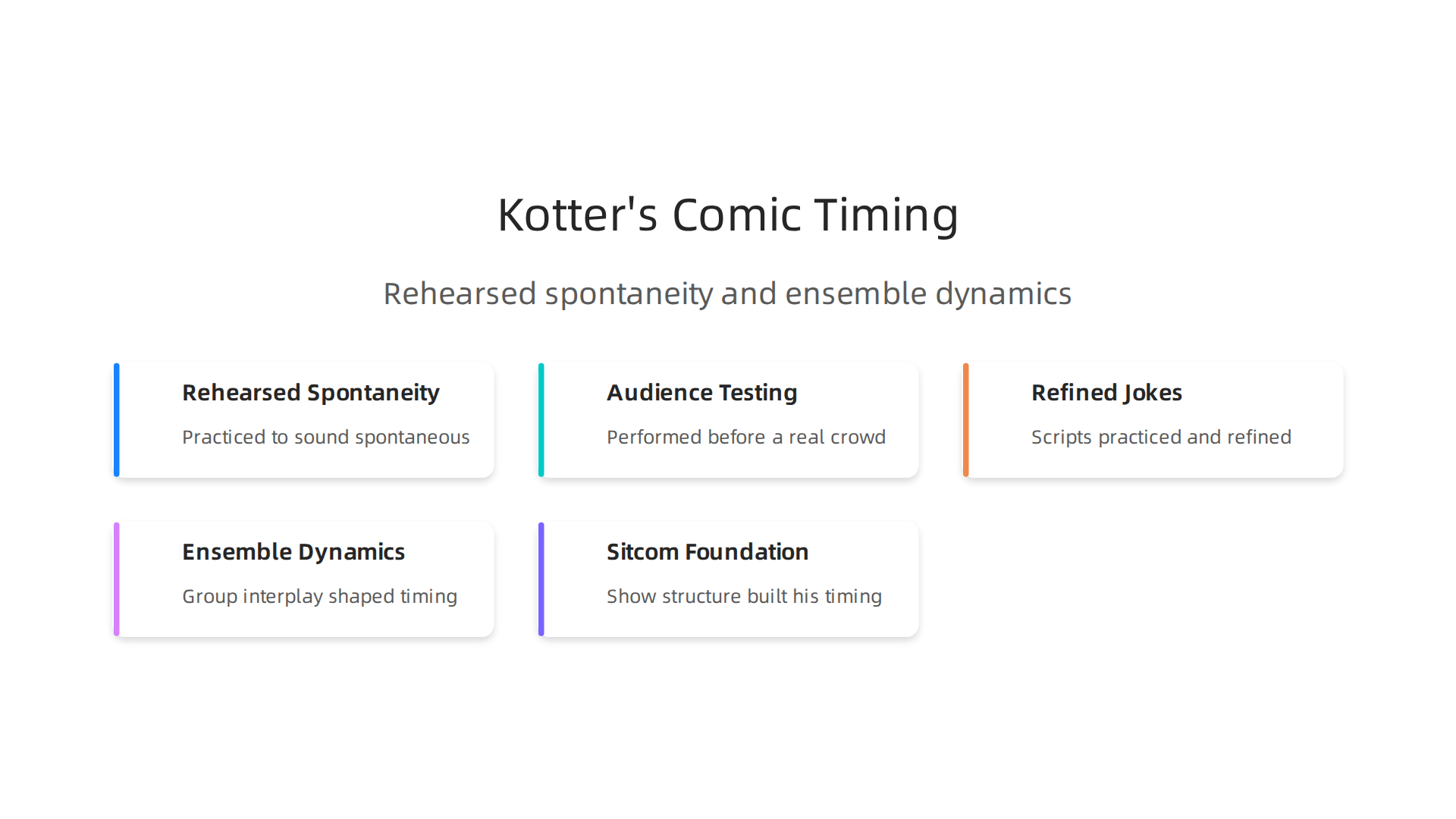
Your content needs the same approach. Write your funny lines. Read them out loud. If they do not land, rewrite them. Test them on a small team first. Then publish.

The show also taught something important about ensemble dynamics. Barbarino was funny because of how he bounced off Sweathogs like Horshack and Epstein. The humor came from character, not punchlines. When you create content, give each piece a clear personality. Let your brand voice play off your audience’s expectations. That is where real connection happens.
If you enjoyed learning from Travolta’s early work, you will also love how the Anna Kendrick movies we covered use similar character-driven comedy techniques.
Want to build a comedic voice that actually lands? Contact us today and let us help you find the right direction for your next project.
2. Grease: Musical Comedy That Crosses Generations – A Lesson in Timeless Niche Appeal
Now let’s talk about "Grease." This 1978 film is a masterclass in blending different types of comedy. You get musical numbers. You get slapstick. You get sweet romantic moments. And you get sharp, funny one-liners. That mix lets the movie reach both mainstream audiences and cult followers at the same time.
Here is the thing. Most movies pick one tone and stick with it. Grease picked three or four. And it worked. New generations discover this film every few years. That is the power of layered content.
So what does this mean for your content strategy in 2026?
Think about layering your own work. Embed a niche joke inside a story anyone can follow. Your die-hard fans feel smart for catching the inside reference. New readers still enjoy the ride. Everyone wins.
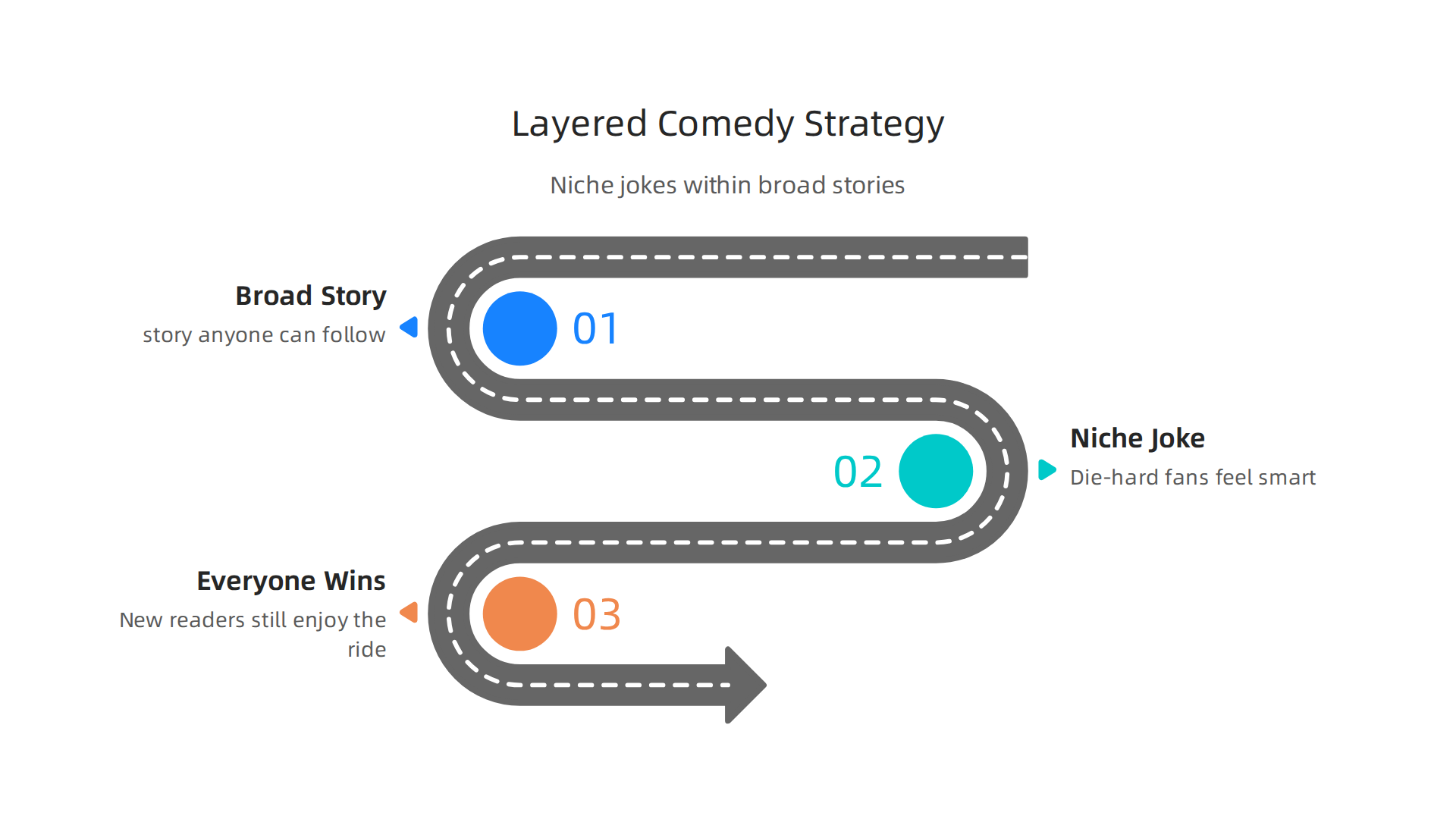
The 2026 Social Trends Report from Ogilvy points out that the next big shift in marketing is about creating work that earns attention and carries emotional substance. Grease does exactly that. The broad love story earns attention. The inside jokes about high school life create intimacy with fans. The emotional themes of friendship and growing up carry real weight.
Look at how Kevin Hart and Ben Affleck approach their work. Both layer specific, personal humor into stories that feel universal. Robert Pattinson does the same thing with his movie choices. The principle stays the same no matter the medium.
We talked earlier about how Anna Kendrick movies use character-driven comedy to keep audiences engaged. Grease takes that same idea and stretches it across musical, romantic, and slapstick genres all at once.
Here is the practical takeaway for today. Do not limit yourself to one tone. Mix broad appeal with niche details. Your audience will thank you for it.
Want to try this layering approach in your own content? Contact us today and let us help you build a voice that connects with both niche fans and the wider crowd.
3. Look Who’s Talking: The Art of Voice-Over Humor and Internal Monologue
Ever wonder why you feel like you know the characters in Look Who’s Talking so well? The answer is voice-over. In that film, John Travolta plays a charming cabbie, but the real magic happens when you hear a baby’s thoughts. The gap between what the baby says and what he actually thinks creates pure situational irony. That contrast builds intimacy fast. You are in on the joke. And that feeling keeps you hooked.
This technique shows up in many john travolta movies. His delivery often relies on a knowing glance or a pause. But voice-over takes that to another level. The audience becomes a confidant. You understand the character’s inner world before anyone else does. That is powerful storytelling.
Now think about your B2B content in 2026. Most brand content sounds like a press release. It feels distant. What if you tried an internal monologue format instead? Share what your team really thinks during a product launch. Write a blog post that sounds like a "thought dump." The 2026 B2B content playbook suggests that creative video has to be funny and prove that the brand understands its audience.

Voice-over does exactly that. It proves you get the human side of business.
This is similar to how kevin hart movies and ben affleck movies use personal, self-aware narration to break the fourth wall. Even robert pattinson movies often rely on internal monologue to add depth. The principle is the same: let the audience hear the real thoughts behind the polished exterior.
Want to crack a familiar format for surprising effect, just like Look Who’s Talking did with a baby voice-over? Contact us today and we can help you find the right comedic voice for your brand’s content.
4. Saturday Night Fever: Unearthing Comedy in Drama – How to Subvert Expectations
Now let’s talk about a film that looks like pure drama. Saturday Night Fever is famous for launching disco into the mainstream. But here’s what most people forget: it is also full of comedy.
The film follows Tony Manero, a young man who escapes his dead-end life through dancing. The disco scenes feel electric. The drama hits hard. But the 1970s fashion, the awkward pickup lines, and the over-the-top dance moves all create unintentional laughs decades later. That is a masterclass in tonal subversion.
You can see this clearly in the iconic dance floor scene. John Travolta struts across the floor with total seriousness. The audience laughs because the contrast is so big. He is committed. And that commitment makes the moment funny. The film became a cultural milestone partly because of this blend, as Wikipedia notes about its massive cultural impact.
This is a powerful lesson for your B2B content in 2026. Most brands treat serious topics with a straight face. They are afraid to crack a joke. But Saturday Night Fever shows you can handle heavy themes while still having fun. The trick is to be intentional. You do not need to write a comedy. You just need to add one unexpected twist. Maybe you make a dry spreadsheet funny by turning it into a dance challenge. Or you present a compliance update with a disco beat.
The same principle of subverting expectations shows up in many kevin hart movies and ben affleck movies where dramatic moments suddenly break into humor. Even robert pattinson movies use tonal shifts to keep audiences engaged.
One iconic scene can become a shared reference point for your whole community. Want to figure out how to add a surprising comedic twist to your next serious campaign? Contact us today and we can help you find the right balance.
This is similar to what we discussed in the Anna Kendrick movies analysis and the Predator franchise strategy. Both show how tonal contrast can boost engagement in unexpected ways.
5. Pulp Fiction: Absurdist Dialogue and Nonlinear Storytelling as Content Strategy
From Saturday Night Fever’s tonal subversion, let’s jump to Quentin Tarantino’s Pulp Fiction. This film proved that absurd dialogue and a scrambled timeline can both confuse and captivate. You remember the scene where Vincent and Jules debate fast food in Europe. It goes on forever. It’s pointless. And it’s absolutely unforgettable.
That risky style turned a film about hitmen into a cultural landmark. Tarantino’s characters banter about things that have nothing to do with the plot. That is classic absurdist humor.

A paper on transgressions in absurd comedy notes how these films break character norms to create fresh laughs (source: Atlantis Press).
In Pulp Fiction, the absurdity makes the violence feel lighter and the characters feel real.
The nonlinear story also plays a trick. It makes the audience work. You have to piece together timelines. That brain work builds loyalty. People love feeling smart for “getting it.” This is the same reason audiences return to kevin hart movies, ben affleck movies, and robert pattinson movies when those films take narrative risks.
What can B2B content learn? In 2026, you don’t have to tell your story in a straight line. You can start with a weird customer quote. You can circle back to the punchline later. Or you can drop a completely irrelevant joke in the middle of a serious case study. That surprise holds attention.
We explored similar ideas when we looked at Anna Kendrick movies reveal comedy techniques and the Predator franchise strategy. Both show that nonlinear, absurd approaches can boost engagement.
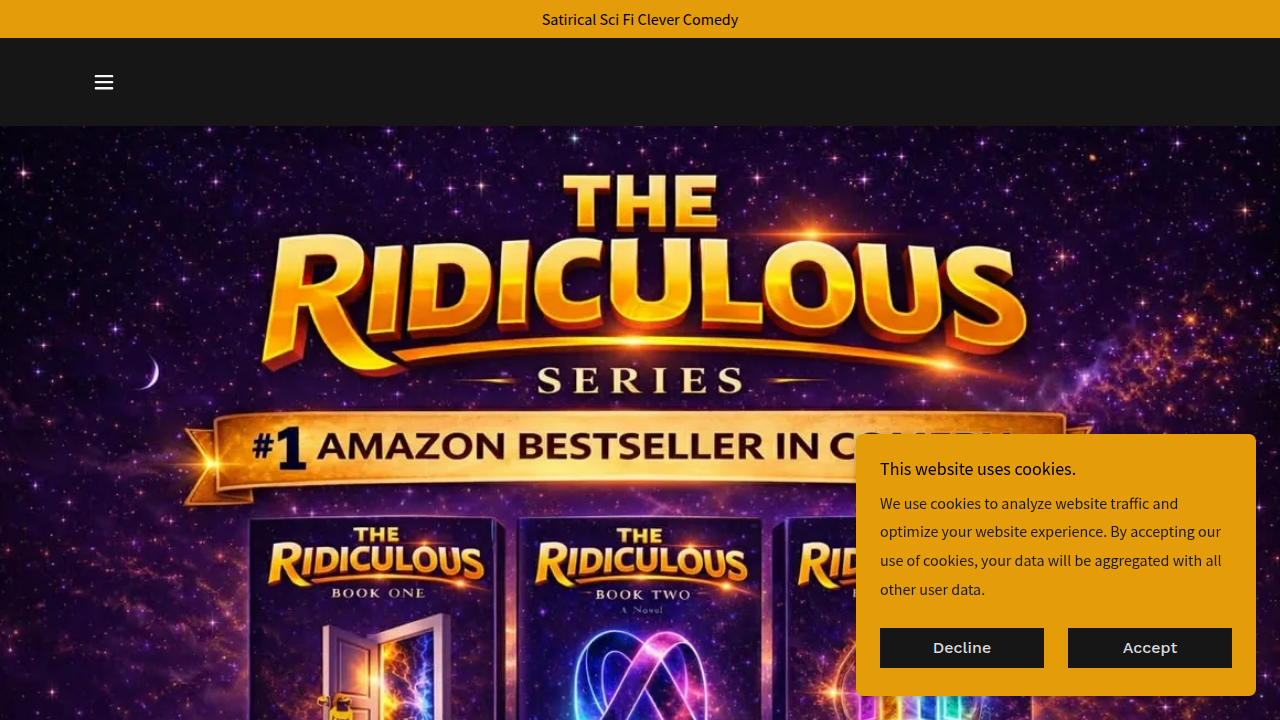
Want to see how absurdist storytelling works in practice? Start Reading a series that turns strange ideas into clever comedy, much like Pulp Fiction did for film.
6. Get Shorty: Satire of Hollywood and Self-Aware Humor in B2B Positioning
From Pulp Fiction‘s nonlinear chaos, we move to Get Shorty, a John Travolta movie that perfected self-aware satire. In this film, a mobster enters Hollywood and starts critiquing how movies are made. The joke is on the industry itself. That meta-humor makes the audience feel smart. They are in on the joke.
This works for B2B content, too. You can use satire to poke fun at your own industry’s silly habits. When you show you understand the absurdities of your field, readers trust you more. A Reelviews review of Primary Colors, another satirical John Travolta film, notes how these stories walk a fine line between comedy and critique. That balance is key.
The trick is keeping it accessible. Get Shorty uses insider Hollywood jokes but never loses the casual viewer. Similarly, your content can include niche industry references while staying clear to a broader audience. This self-aware style also appears in many kevin hart movies, ben affleck movies, and robert pattinson movies where actors break the fourth wall. It builds loyalty across different reader groups.
We’ve touched on similar ideas when talking about how Anna Kendrick movies reveal comedy techniques and the Predator franchise strategy. Both show that self-aware humor engages readers.
If you want to see how self-aware satire unfolds creatively, explore the series where absurd comedy meets clever storytelling.
7. Primary Colors: Political Satire for the Niche Reader – Lessons in Tone Control
We just saw how Get Shorty makes fun of Hollywood. Well, Primary Colors takes that same smart, self-aware approach and points it directly at politics.
This 1998 film features John Travolta as a Bill Clinton-like governor. It is a risky move. Political topics can easily turn off half your audience. But Travolta pulls it off. His deadpan delivery lets the satire land without feeling mean. Critics note the film is "funny and heartfelt", which is a hard balance to strike. Some felt it was too long or tedious, proving the fine line you walk with this tone. In 2026, this skill is more valuable than ever.
Here is the thing. Niche audiences, like politically engaged readers, are smart. They hate being talked down to. They also hate obvious propaganda. What they love is intelligent humor. They want to feel like they are part of an inside joke, not a target.
Just like how Kevin Hart movies rely on high energy, or Ben Affleck movies use a straight face, John Travolta finds a specific, toned-down rhythm here. It is similar to the range we see in Robert Pattinson movies. Each actor knows their audience. You need to know yours, too.
This is a powerful lesson for B2B content creators. If you write for policymakers or advocacy groups, you cannot just pick a side and yell. You need to "dose" serious topics with levity. You need to show that you understand the complexities without getting bogged down.
We have talked before about how Anna Kendrick movies reveal comedy techniques and the Predator franchise strategy for balancing action and comedy. Tone control is everything.
Getting this tone right is hard. It takes practice and a clear strategy. If you want to explore the right comedic direction for your next project, contact us. We can help you find the smart, engaging voice your audience deserves.
8. The Fanatic: B-Movie Camp and the Cult of the Absurd – When ‘Bad’ Comedy Works
Primary Colors showed us sophisticated political satire. Let us flip that completely. Let us talk about The Fanatic.
This 2019 John Travolta movie is a mess. Critics hated it. Audiences laughed at its weird choices and over-the-top performance. But here is the thing. That messiness is exactly why a small group of people love it.
Absurd comedy movies like this work because they break the rules. Researchers call this "transgression" in character and behavior. A 2024 study on absurd comedy explains that these films push boundaries in ways polished mainstream content cannot. The fan becomes part of an inside joke. They are in on the chaos.
Think about it. Kevin Hart movies are polished. Ben Affleck movies are serious. Robert Pattinson movies are weird in a controlled way. But some of the most memorable John Travolta movies take big swings and miss on purpose. That creates a community.
What does this mean for your B2B content? You do not always need to aim for perfection. Sometimes a raw, unpolished take builds stronger bonds with a niche audience. Your readers might be tired of corporate slickness.
Just like Anna Kendrick movies reveal comedy techniques for engagement, campy content teaches us that imperfection can be a superpower. The Predator franchise strategy showed us balance. This shows us that sometimes you throw balance out the window.
If you want to explore how absurd humor can connect with your audience, explore the series for a taste of intelligent chaos.
Summary
This article analyzes seven iconic John Travolta films to extract practical lessons for creating distinct, high-impact comedic content in 2026. It shows how sitcom training, musical layering, voice-over, tonal subversion, absurdist dialogue, satire, and even campy failures each provide concrete techniques you can apply to brand and B2B content. By examining scenes and delivery—from Welcome Back, Kotter’s timing to Pulp Fiction’s nonlinear absurdity and The Fanatic’s cult appeal—the piece explains why specificity and commitment outperform generic jokes. You’ll learn how to rehearse spontaneity, layer niche jokes inside broad stories, use internal monologue to build intimacy, add unexpected tonal twists, and choose when to polish versus embrace imperfection. The article ties these lessons to current marketing trends and offers clear prompts for testing and applying each approach to your next campaign.