
M Night Shyamalan Movies Reveal Genre Bending Humor for B2B Content

Introduction
When you hear "M. Night Shyamalan movies," your brain probably jumps straight to twist endings. The Sixth Sense. The Village. Split. But here’s the thing: there’s another layer hiding in plain sight. Subtle, unexpected humor sneaks into almost every one of his films.

It’s not slapstick or one-liners. It’s the dry, quiet kind of comedy that makes you chuckle and then wonder why you’re laughing.
If you’re a B2B content creator in 2026, you know the drill. You need to grab attention, hold it, and build real trust. That’s harder than ever. Google’s E-E-A-T guidelines now demand experience, expertise, authority, and trustworthiness from every piece of content you produce. According to the 2026 E-E-A-T playbook, trust signals matter more than many realize. Audiences can smell fake humor from a mile away. So how do you create comedy that feels fresh, genuine, and actually connects?
Shyamalan’s approach points the way. He bends genres so smoothly that you barely notice the shift. One moment you’re in a tense thriller, the next you’re smirking at a character’s awkward pause. It works because the humor feels earned, not forced. That’s exactly what smart content needs today. And it’s not just Shyamalan. Think about how guy ritchie movies use quick-witted banter to build character, or how amanda seyfried movies rely on perfectly timed facial expressions. These techniques are transferable. They can transform dry B2B copy into something people actually enjoy reading.
In this article, we’ll break down the specific genre-bending tricks Shyamalan uses to weave comedy into serious stories. Then we’ll turn those lessons into actionable steps you can use for your own content strategy. No gimmicks. Just real, surprising humor that builds credibility.
If you’re ready to explore how absurdist comedy can reshape your content, check out our analysis of how Anna Kendrick movies reveal comedy techniques that boost content engagement. And for a direct taste of witty, offbeat storytelling, Start Reading the sci-fi comedy series that turns strange ideas into clever punchlines.
The Anatomy of Genre-Bending: Shyamalan’s Signature Blend
You might think Shyamalan stumbles into comedy by accident. But he doesn’t. It’s a deliberate tool. Think about the way he uses deadpan dialogue. Characters say strange things with straight faces. That creates tension and then releases it with a quiet laugh.
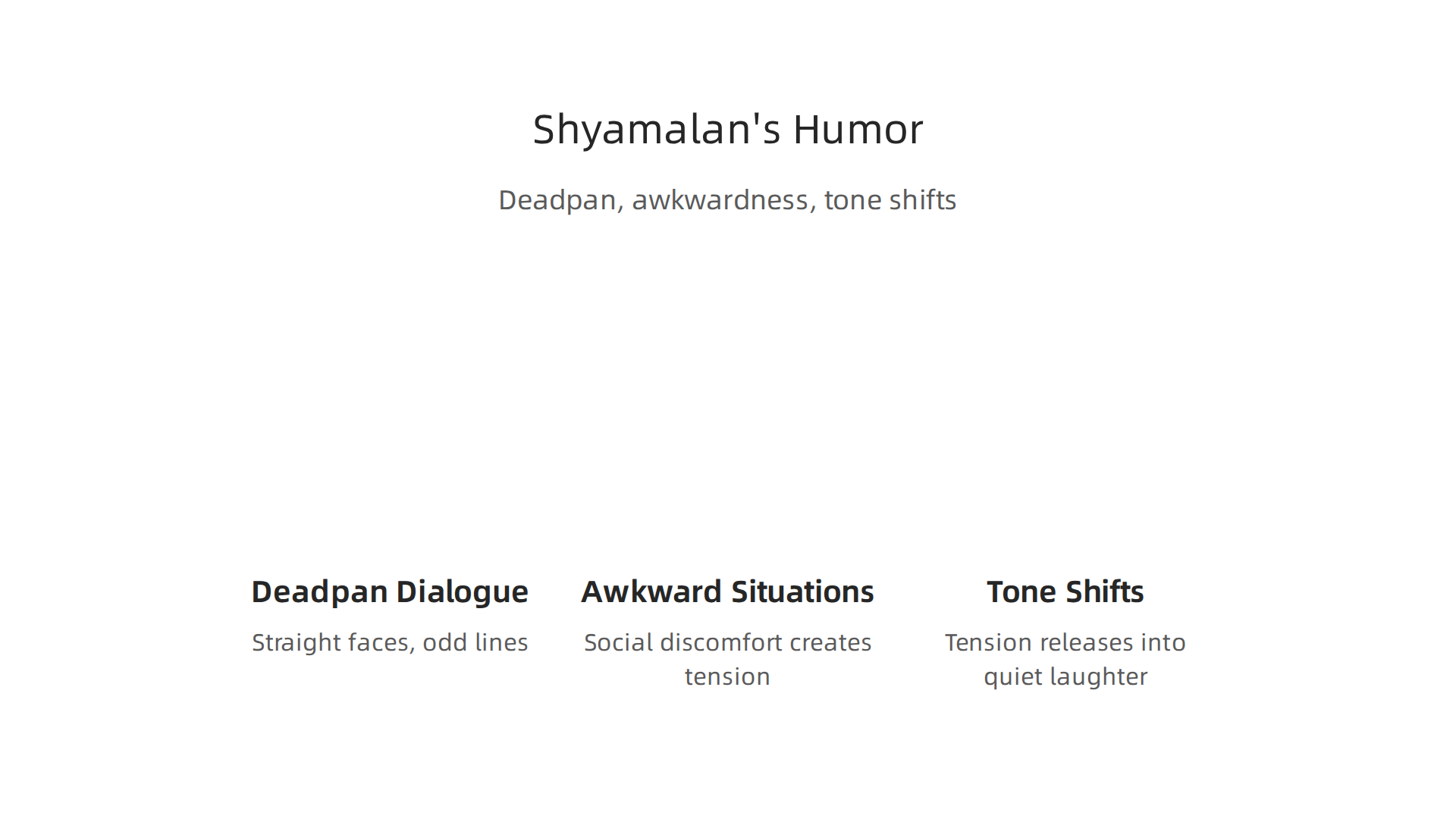
Look at The Sixth Sense. The famous "I see dead people" line works because it’s delivered so matter-of-factly. That’s not just scary. It’s also subtly funny. As one critic pointed out, the twist in that film depends on a single line written with perfect timing ^1.
Then there are the awkward situations. Shyamalan loves putting characters in uncomfortable social moments. In Signs, the family sits at dinner and nobody knows what to say. The pause goes on too long. You feel the awkwardness, and then you laugh at it because you’ve been there.

That blend of horror and everyday awkwardness is pure Shyamalan. Another piece on his comedy genius explains that embracing the humor in his films "brings you wild, unabashed joy" ^2. He isn’t just a thriller director. He’s a tinkerer who experiments with tone [^3].
So what does this mean for your content? Simple. You can borrow his technique by mixing serious information with quiet, unexpected humor. For example, if you’re writing about a dry topic like compliance regulations, drop in one relatable awkward moment. Maybe a story about someone accidentally CC’ing the wrong person. That surprise shifts the reader’s emotional state. They get a small chuckle, and the key point sticks longer.
If you want to see more examples of how unexpected comedy keeps audiences hooked, check out how Anna Kendrick movies reveal comedy techniques that boost content engagement. Her timing and facial expressions work the same way Shyamalan’s pauses do.
And if you’re ready to experiment with absurd, genre-bending humor in your own storytelling, Start Reading the sci-fi comedy series that turns strange ideas into clever punchlines. It’s a great example of how wild tone shifts can feel natural and rewarding.
^1: Moviemetropolis article on The Sixth Sense twist line.
^2: Upsidedownshark article on Shyamalan’s comedy genius.
[^3]: Act Four Screenplays article on Shyamalan as a mad scientist tinkerer.
Case Studies: Shyamalan’s Most Unexpectedly Humorous Moments
Let’s look at three specific moments from m night shyamalan movies that prove he’s a comedy genius hiding inside a thriller director. Each one works the same way: it builds tension, then lets it out with a laugh.
Bruce Willis in The Sixth Sense
You know the moment. Malcolm Crowe sits with his wife in a restaurant. She drops his napkin ring. It rolls under the table. She doesn’t pick it up. And then it hits him. "I see dead people." But the real punchline comes later. Malcolm realizes his wife has been ignoring him the whole movie because he’s been dead the whole time. The reveal is shocking. But it’s also quietly funny. Think about it. All those awkward pauses. All those one-sided conversations. The audience sits there for a few seconds letting the realization sink in. Then comes the small laugh. That moment is one reason the film’s twist is so famous. One critic pointed out that the entire twist depends on a single line written with perfect timing ^1. That timing is pure comedy.
The alien reveal in Signs
Think about the birthday party scene. The family watches news footage of an alien walking through a backyard. The shot is grainy. The music is tense. And then Merrill (Joaquin Phoenix) says, "Move, children. Your father is trying to see the alien." The line is delivered so straight that it’s almost absurd. The audience has been holding their breath, and then they release it with a chuckle. It’s not a joke about aliens. It’s a joke about a dad wanting a better view of the news. That’s what makes it work. Shyamalan takes a terrifying moment and undercuts it with something painfully ordinary. Another article explains that embracing this comedy in his films "brings you wild, unabashed joy" ^2.
The kitchen scene in Split
This one is subtle. Kevin (James McAvoy) is preparing dinner for the girls he has trapped. He’s switching between personalities. One personality wants to hurt them. Another personality wants to feed them. The result is a tense, strange, and genuinely funny moment. The girls sit there, terrified, while this man sets the table, argues with himself, and then offers them a proper meal. The comedy comes from the absurdity of the situation. You shouldn’t be laughing. But you are. That tension release is what makes the scene stick with you. It proves that m night shyamalan movies can shift tones successfully and close out all aspects of the narrative appropriately [^4].
What this means for your content
Here’s the lesson. You can borrow Shyamalan’s technique by using misdirection. Build tension. Introduce a serious problem. Let your reader sit with it for a moment. Then release it with a small surprise or an unexpected observation. The payoff lands harder because you earned it.
For example, if you write a post about a heavy topic like compliance failures, you could start with a tense description of a security breach. Then reveal the cause: someone wrote their password on a sticky note under their keyboard. The audience winces, then laughs. That laugh makes the lesson more memorable.
Want to see how other actors use perfect timing to create that same tension-to-laughter arc? Check out how John Travolta comedic roles reveal the formula for niche humor that works. The technique is the same. You only need to swap the movie for the medium.
If you’re ready to try this kind of tone shift in your own storytelling, Start Reading a sci-fi comedy series that turns strange ideas into clever punchlines. It’s a great example of how to make people laugh while still keeping them engaged with the story.
Why Genre-Bending Humor Works: Psychological Insights
Why does a joke in a scary movie land so well? You’re tense. Your heart is pounding. Then someone says something ordinary, and you burst out laughing.

That moment isn’t magic. It’s psychology.
Two main theories explain why genre-bending humor in m night shyamalan movies works so well. The first is incongruity theory. Research from the American Psychological Association shows that humor often comes from a mismatch between what you expect and what happens
^1. When a horror movie suddenly shifts to a quiet, awkward family moment, your brain has to make a quick U-turn. That surprise creates a laugh.
The second theory is tension relief. Fear builds up your fight or flight response. Your body gets ready for danger. Then, when the threat turns out to be harmless or absurd, the tension releases. Laughter becomes the safety valve. This process is so powerful that a 2024 study found fear and humor share similar brain pathways ^2. They’re connected at a deep level.
What does this mean for your content? You can use the same trick. Build suspense in your writing. Maybe you describe a common problem your audience faces. Make it feel serious. Then reveal a simple, surprising solution. That release makes your message stick better than any dry list of facts.
Other directors use this technique too. Think about the way ralph fiennes movies blend drama with sharp comedy, or how guy ritchie movies mix action with witty banter. Even amanda seyfried movies often ride the line between heartfelt and funny. They all rely on the same psychological switch.
If you want to master this tension-to-laughter arc in your own work, look at how the principles work across different styles. The Anna Kendrick movies reveal comedy techniques that boost content engagement and show you exactly how to time that release.
Ready to try it yourself? Read Book 1 of a sci-fi comedy series that turns strange setups into wildly funny punchlines. It’s a perfect example of using incongruity and tension release in storytelling.
B2B Content Lessons from Hollywood’s Dark Comedies
So what does this mean for your next whitepaper or LinkedIn post? A lot more than you think.
B2B marketing has a reputation for being dry. Endless case studies. Charts that blur together. Safe, predictable content that nobody remembers.

But in 2026, the brands winning attention are the ones borrowing tricks from movies like the ones we just talked about.
Think about it. M night shyamalan movies force you to sit through tense, confusing moments before revealing the twist. Your B2B content can do the same thing. Start with a problem that makes your reader uncomfortable. Build that tension. Then hit them with an unexpected, simple solution. That release makes your message sticky.
The B2B Marketing Humour playbook explains exactly why this works: humor drives memory and trust without hurting your credibility ^1. When you blend serious business topics with a surprising punchline, you stand out in a crowded feed. You are not just another vendor. You become a brand with a personality.
Here is the real trick. You need to align your humor with your brand values. If you sell cybersecurity software, slapstick jokes will feel wrong. But a dark, self-aware joke about data breaches? That lands perfectly. Just like guy ritchie movies balance fast action with witty dialogue, your content can balance industry expertise with a light touch.
Some B2B companies are already nailing this. They use surreal humor in thought leadership posts or awkward, honest videos that feel more like a ralph fiennes movies character study than a corporate pitch. Others lean into the heartfelt funny moments you see in amanda seyfried movies to humanize their founders.
Want to see how this genre bending approach plays out in long form content? Check out how the Predator franchise holds the key to B2B content strategy with its action comedy balance.
Ready to try this in your own work? Visit Ridiculous to explore a series that mixes strange sci fi setups with clever punchlines. It is the perfect example of turning tension into laughs while keeping your audience hooked.
Producing Original Absurdist Content on a Budget
Creating something truly original sounds expensive. But it does not have to be.
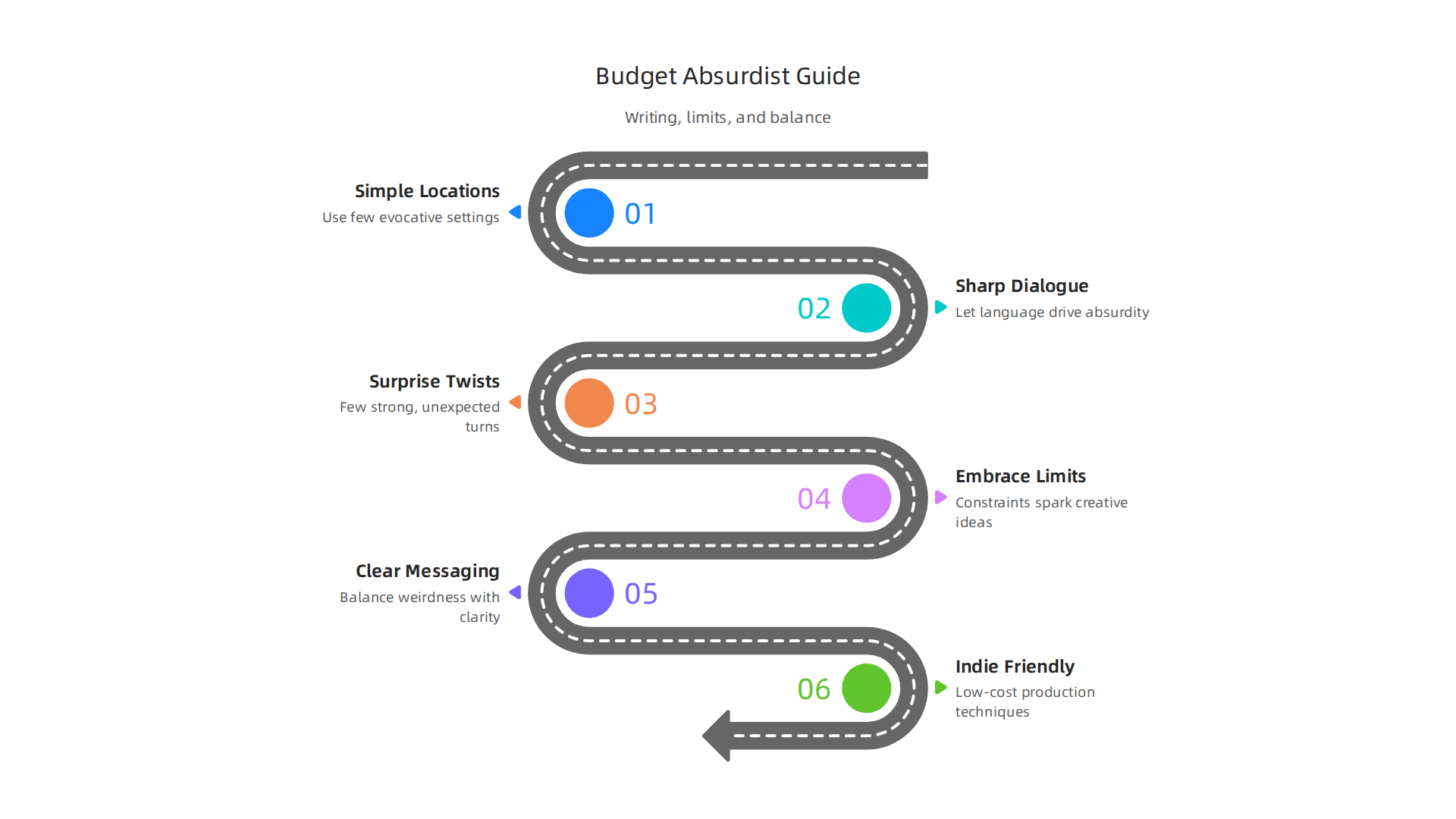
Think about some of the best M. Night Shyamalan movies. He built his career on weird, high-concept stories that did not require Marvel-sized budgets. He relies on simple locations, sharp dialogue, and a few good twists. This is a perfect lesson for any indie creator or B2B content team trying to do something different in 2026.
Independent filmmakers have to master this. They do not have a choice. The reality of making an indie film today is tough, but the doors are wide open. Over 2,000 indie films were submitted for the 7th Annual Award This! in 2026 (Film Threat Awards). The ones that break through use clever techniques to make a little go a long way.
They lean heavily on dialogue to drive the story. They use unexpected props to create surprise. And they use minimalist settings to keep the focus on the characters. Using unexpected props and dialogue is something we saw work well in our look at John Travolta’s comedic roles.
So how can a B2B content team use the same tricks?
Embrace your limits. If an indie filmmaker can build a tense scene in one room, you can build a great campaign around one strong idea. Constraints force you to be more creative.
Let the writing do the heavy lifting. Instead of spending your whole budget on fancy video effects, invest in smart, original writing. Absurdist humor works because the idea itself is funny. The production does not need to be flashy. Look at how Anna Kendrick’s timing turns a simple scene into comedy gold.
Balance the weird with the clear. You need the right mix of creativity and a clear message. This is similar to balancing action and comedy, which we break down in our analysis of The Predator franchise.
This is exactly the kind of smart, budget-friendly content that Humorous Humor creates. We help publishers and agencies reach smart audiences who are bored with predictable material.
If you want to see what this approach looks like in action, Start Reading our absurd sci-fi comedy book. Or Explore the Series to see how we turn strange ideas into something memorable.
Building Trust Through Humor: E-E-A-T for Comedy Content
Can you trust a funny person? Actually, yes. Especially when that person has already earned your respect.
Think about M. Night Shyamalan movies. You know him for serious, twist-heavy thrillers. When a bit of absurd humor sneaks into his scenes, it lands hard. Why? Because you trust the storyteller first. His reputation as a serious filmmaker makes his comedy feel earned, not goofy.
The same goes for other directors and actors. Ralph Fiennes movies often showcase intense drama, yet his comedic timing in dark roles surprises audiences. Guy Ritchie movies blend fast dialogue with sharp wit, and the audience trusts that the humor has a purpose. Even actors known for lighter work, like Amanda Seyfried movies, benefit from the trust built through consistent, quality performances.
So how do you build that kind of trust with your own comedy content?
Transparent authorship. Readers appreciate knowing who wrote the piece. Put real names behind your work. It signals that someone stands behind the ideas.
Citing evidence. Comedy that lands needs proof behind it. When you reference trends, data, or examples, link to a reliable source. For instance, understanding the reality of making an indie film in 2026 helps ground absurdist humor in real context. That honesty builds authority.
Acknowledging subjectivity. Not everyone will laugh at the same thing. Admit that humor is personal. This openness actually strengthens your credibility. You are not pretending to have all the answers.
We saw this principle work in our breakdown of John Travolta’s comedic roles. He earned our trust in dramatic parts first, so his silly turns felt like a reward, not a risk.
When you apply E-E-A-T principles to comedy, you create content that entertains without losing authority. That is exactly the approach we use at Humorous Humor. Want to see more examples of trust-building comedy? Read our articles for practical insights on blending humor with credibility.
Actionable Framework: Applying Shyamalan’s Twists to Your Brand Strategy
You do not need to make a Hollywood movie to use a Shyamalan-style twist. The same structure works for blog posts, videos, and social content. Here is a simple three-step framework you can use starting today.
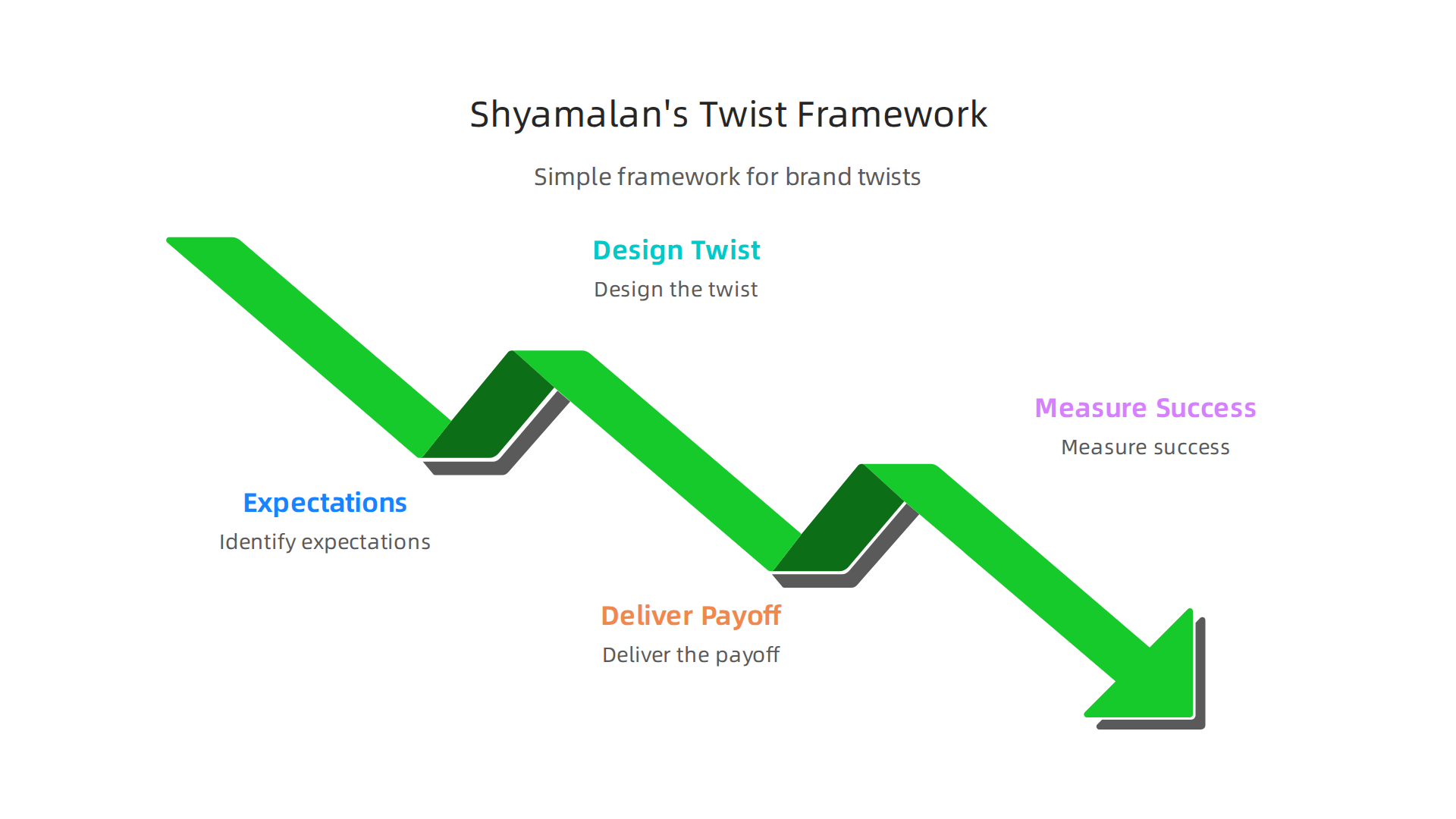
Step 1: Identify audience expectations.
What does your audience already believe about your industry? List their assumptions. For example, B2B buyers expect dry, serious content. That expectation is your starting point. Knowing what people predict gives you the power to break that prediction later. A strong B2B content marketing strategy in 2026 starts with mapping out those common beliefs.
Step 2: Design a twist.
Now take that expectation and flip it. If everyone expects a formal case study, write a funny one instead. If your readers expect a boring product demo, turn it into a short skit. Use genre mixing like Shyamalan does. Mix the serious with the absurd. For instance, we explored how Anna Kendrick movies reveal comedy techniques that blend unexpected tones to hook viewers. That is exactly what you want in your brand content.
Step 3: Deliver the payoff.
Your twist needs a real, satisfying resolution. If you set up a joke, land it well. If you create a surprise, make sure it rewards the reader. The payoff is where the trust you built earlier pays off. Research shows that humorous advertising drives higher recall when the punchline ties back to the brand message.
Measure success.
Track how people react. Look at engagement metrics like comments, shares, and time on page. Monitor brand recall through surveys or social listening. Meme marketing data shows that campaigns using surprise and humor can achieve up to 60% higher engagement than standard content. Use those numbers to refine your next twist.
Start small. Pick one blog post this week. Identify the audience expectation. Write a twist. Measure the response. Then do it again.
Want more practical frameworks like this one? Read Articles on our site for step-by-step guides on blending humor with strategy.
Summary
This article shows how M. Night Shyamalan’s quiet, genre-bending humor can be repurposed to make B2B content more memorable and trustworthy. It explains the director’s techniques—deadpan lines, awkward pauses, and tone shifts—then translates them into practical writing and content strategies you can use for whitepapers, posts, and video. The piece walks through film case studies, the psychology behind why tension-to-laughter works, and low-budget production lessons for indie teams. It also explains how to protect credibility under today’s E-E-A-T standards and gives a simple three-step framework to design and measure surprise-driven content. By reading this, you’ll know when to build tension, how to deliver an earned payoff, and what metrics to track so humor boosts engagement without undermining authority.