
How to Find Funny Photos That Boost Social Media Engagement

Introduction
You know the feeling. You are scrolling through your content library, and everything feels stale. You need something that will stop the scroll. You need something that will make people pause, smile, and maybe even laugh out loud. You need funny photos.
But here is the problem. Finding original, high quality funny photos and videos that actually connect with your audience is hard. Really hard. Most content marketers end up settling for generic stock humor. You know the type. A person laughing at a salad. A cat wearing a tiny hat. It is safe, but it does nothing for your brand.
And your audience can tell.
In 2026, people spend an average of six hours each day on media and entertainment, according to a recent survey shared by Social Factor. But here is the thing. That number is not growing anymore. You are not competing for more attention. You are competing for a share of the same attention. And the research from Smart Insights shows that 63.9% of the world’s population now uses social media. That is a lot of noise to cut through.
So what actually works?
Humor. Real, well crafted, original humor.
The Zen Agency breaks down the science of social media engagement and shows that emotional content drives action. And nothing triggers emotion faster than a well placed laugh.
But not just any laugh works anymore. Sophisticated readers want something different. They want absurdist comedy. Surreal humor. The kind of funny animal videos that feel genuinely unexpected. The kind of funny cats that make you do a double take. They want content that makes them feel smart for laughing at it.
This is where most content marketers get stuck. You know you need better humor. But where do you find it? How do you source it? How do you make sure it fits your brand without feeling forced?
That is exactly what this guide is for.
We are going to walk through a research backed, expert curated approach to finding and using hilarious visual content. We will cover where to look. How to pick the right pieces. And how to use them in a way that actually builds audience loyalty instead of just getting a quick giggle.
And along the way, we will borrow some proven comedy techniques from unexpected places. For example, the way How to Train Your Dragon uses comedy to strengthen character bonds is the same technique that can strengthen your content strategy. Serious storytelling and smart humor go hand in hand.
So if you have ever tried running a try not to laugh challenge with your team to test your content, or if you have spent hours searching for the perfect image only to give up and use something generic, this article is for you.
Let us change that starting right now. Because your audience deserves better than stock photos. And you deserve content that actually works.
If you are ready to explore a world of absurdist, witty humor that breaks all the rules, check out a series that turns strange ideas into clever comedy at DoriDiculous.com. It is the kind of inspiration that reminds you what real originality looks like.
The Science of Laughter: Why Funny Photos and Videos Boost Engagement
Have you ever wondered why a funny cat video makes you instantly want to send it to three friends? Or why a single funny photo can stick in your brain for days? There is real science behind this.

And once you understand it, you can use it to make your content work harder.
When you see something genuinely funny, your brain releases a hit of dopamine. That is the same chemical that makes you feel rewarded, focused, and happy. It is also the chemical that helps you remember things.
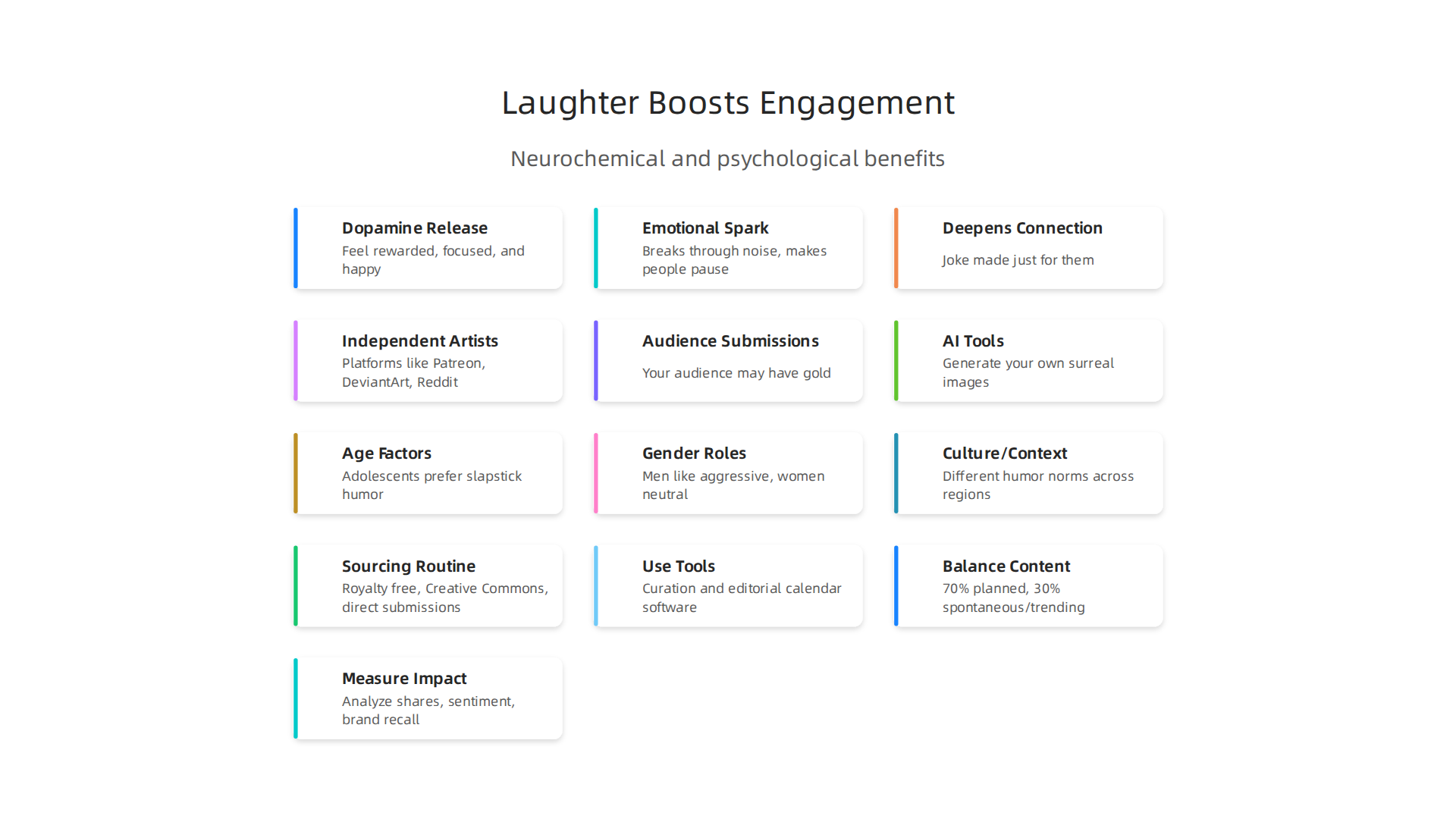
So when someone watches a funny animal video that makes them laugh, they are more likely to remember your brand. They are more likely to come back. And they are much more likely to hit the share button.
The team at Zen Agency explains that emotional content is what drives real engagement on social media. And humor is one of the fastest ways to create that emotional spark. It breaks through the noise. It makes people pause mid scroll. In a world where 63.9% of the global population uses social media, according to Smart Insights, you need every advantage you can get.
Here is the thing. Not all humor works the same way. Generic jokes get generic results. But brands that use tailored humor, content that fits their specific audience like a glove, see much higher engagement. The reason is simple. When you make someone feel like the joke was made just for them, the connection deepens. They trust you more. They want to see what you post next.
This is where understanding your audience matters most. If you run a business audience that loves absurd wit, picking the right try not to laugh style content can make all the difference. You want visuals that surprise them. That make them feel smart for getting the joke.
Want to see how this works in practice? Think about the comedy techniques used in movies like How to Train Your Dragon. The way that film uses humor to build character bonds is the same approach that can strengthen your B2B content strategy. It is all about creating a shared moment of laughter that brings people closer to your brand.
So next time you are choosing funny photos for your next post, think about the brain science behind it. Pick something original. Pick something that sparks that dopamine hit. Your audience will remember you for it.
If you are ready to explore content that turns strange ideas into clever comedy, take a look at the series at DoriDiculous.com. It might be exactly what you need to stand out in 2026.
Sourcing Original Absurdist Comedy: Beyond Stock Photos
Now that you know why funny photos work so well, the next question is where to find them. If you have ever scrolled through a stock photo site looking for something original, you already know the problem. Most of those pictures feel fake. The smiles look forced. The situations are predictable. And your audience can smell it from a mile away.
That is the opposite of what you want.
Stock photo sites produce generic humor. They are designed for mass appeal, not niche brilliance. But your audience is not generic. They are intellectually curious. They appreciate something clever and unexpected. That is why you need to go beyond the usual libraries and find original absurdist comedy.
What Makes Absurdist Comedy Different?
Absurdist humor, sometimes called surreal comedy, works by breaking the rules of normal cause and effect. It surprises you. It makes you tilt your head and say, "Wait, what?" According to Wikipedia, surreal humour is built on deliberate violations of causal reasoning. That means the joke does not follow a straight line. And that is exactly what makes it stick.
Where to Find Original Funny Photos
You have a few good options that do not require a huge budget.
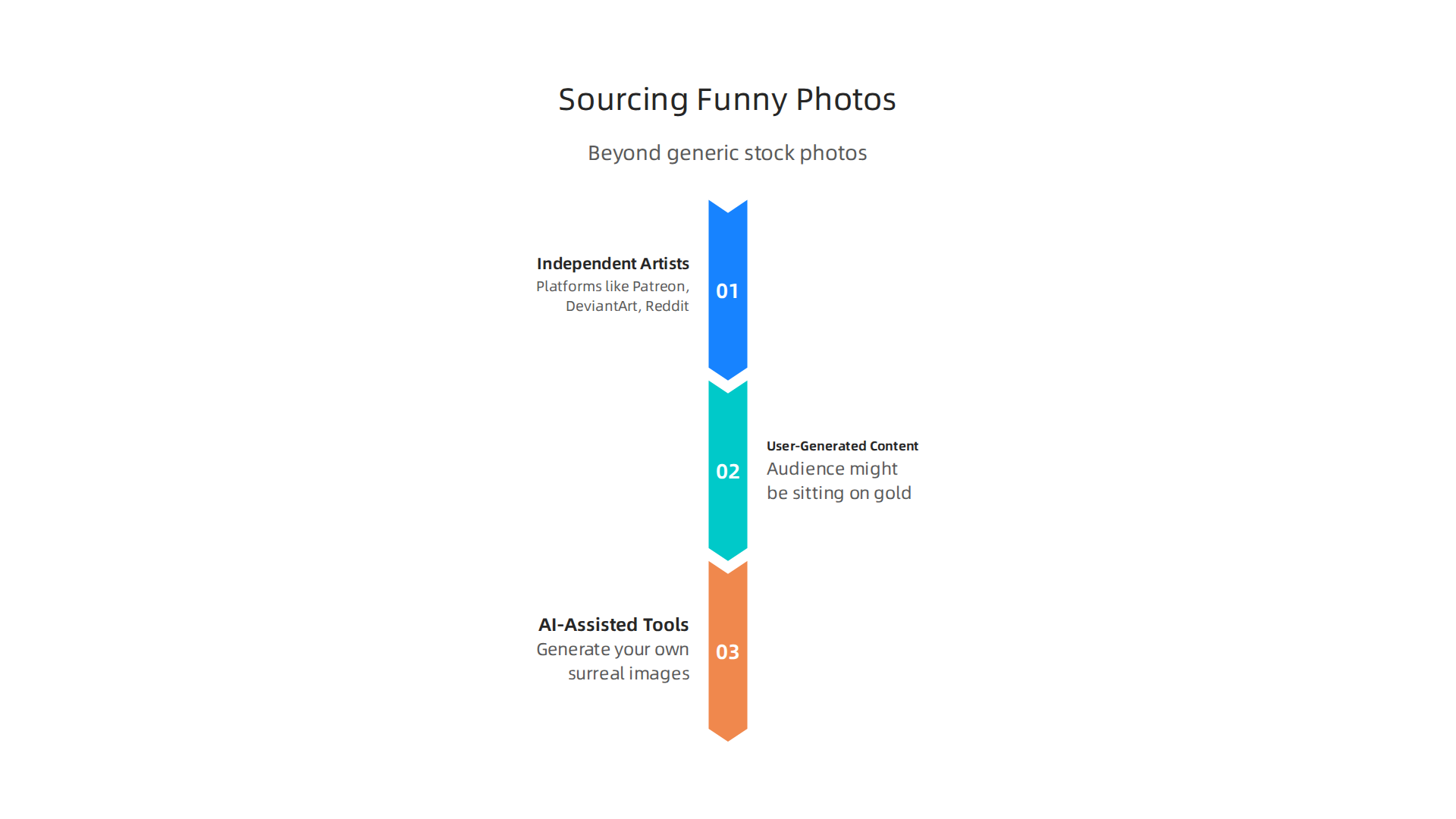
Independent artists. Platforms like Patreon, DeviantArt, and even Reddit are full of creators who make hilarious original content. Reach out to them. Ask for permission to use their work in exchange for credit or a small fee. You get unique visuals. They get exposure. Everyone wins.
User-generated content with permission. Your own audience might be sitting on gold. Funny cat photos, funny animal videos, and clever memes often start with regular people. If you see something you love, ask the creator if you can share it. Just make sure you get clear permission in writing.
AI-assisted tools. In 2026, tools like DALL-E and Midjourney let you generate your own surreal images. You can create a funny photo of a penguin wearing a top hat and juggling flamingos, something no stock site would ever offer. Just be careful with copyright rules for AI-generated content.
The Legal Side: Avoid Copyright Traps
Here is the part many people skip. Using memes or images without permission can get you in trouble. A lot of viral content is copyrighted. Posting it for commercial purposes might not count as fair use. As Silb Law Firm explains, posting a meme that contains copyrighted material could lead to legal action if your use is commercial. The same warning applies to using someone else’s original art without asking.
A curated approach helps you build brand authenticity and avoid these pitfalls. When you handpick hilarious funny photos from trusted sources, you tell your audience you care about quality. You also protect yourself from lawsuits.
Take the Next Step
Finding original absurdist comedy takes a little extra effort, but the payoff is huge. Your audience will notice the difference. They will share your content more. They will trust you more.
If you are ready to explore content that turns strange ideas into clever comedy, check out the series at DoriDiculous.com. It is full of inspiration for your next great post.
And if you want to see how other creators have used original humor to build their brand, take a look at how genre-bending comedy films transform your content strategy. Sometimes the best ideas come from the most unexpected places.
Video Humor: Memes, Viral Clips, and Short-Form Comedy
Alright, you found your original funny photos. Now let us talk about video. Because in 2026, short-form video is where absurdist comedy truly shines.
Think about it. You open TikTok or YouTube Shorts and suddenly a man in a banana costume is giving a serious lecture about quantum physics to a confused cat. That is surreal humor in action. And it works because it breaks the rules of normal cause and effect. As Wikipedia explains, absurdist comedy thrives on deliberate violations of causal reasoning. The weirder the jump, the harder the laugh.
So where do you find video gold without stepping into legal trouble?
The Big Three Platforms
YouTube Shorts, TikTok, and Instagram Reels are your best friends. Each one is packed with creators who make hilarious content daily. But you cannot just grab a clip and post it. That is a fast track to copyright headaches.
Here is the smarter play. Find creators whose absurd style matches your brand. Reach out. Ask if you can share their clip with proper credit. Many creators will say yes because they want more eyes on their work. Some will want a small licensing fee. Both options keep you safe.
And if you want to go a step further, produce your own micro-comedy. You do not need a big budget. A smartphone, a weird prop, and a strange idea are enough.

The audience for surreal humor is growing fast in 2026. A YouTube video exploring why absurdist comedy is having a moment explains that people are hungry for content that breaks the usual patterns. They want something that surprises them.
Timing and Platform Culture Matter
Here is something many marketers miss. Not every joke works on every platform.
A clip of a person talking seriously to a loaf of bread might crush on TikTok. But post that same clip on LinkedIn and people will wonder if you are okay. Each platform has its own culture. TikTok rewards chaos and absurdity. LinkedIn rewards professional humor that still feels clever. Knowing the difference is key.
The same principle applies to other content formats. For example, the way cheesy pick up lines turn into effective engagement strategies shows how matching your tone to your audience makes all the difference.
Attribution Is Not Optional
When you share a clip from another creator, always give credit. Tag their handle. Mention them in the caption. If you licensed the content, say so. Transparency builds trust. And your audience respects brands that play fair.
Want to see how absurdist comedy can be done right in written form? For fans of weird comedy, witty chaos, and sci-fi punchlines, try smarter absurdity with this collection. It is the same playful spirit, ready for your next content idea.
The Right Tone: Matching Humor to Your Audience’s Demographics
Here is the thing about funny photos. Not every joke works for every person. What makes a teenager laugh until they cry might make a grandparent roll their eyes. And that is fine. But if you are using humor in your content, you need to know who you are talking to first.
Age Changes Everything
Your audience’s age is the biggest factor in what they find funny. Research shows that adolescents, especially boys, prefer slapstick humor and jokes that put someone down.
As people get older, their tastes shift. A study on how humor changes with age found that adults start to appreciate "self-enhancing" humor more. That means jokes that help you feel better about yourself, not jokes that make fun of others.
So if your brand targets Gen Z, a funny cat video with absurd sound effects might work great. If your audience is older professionals, you might want humor that feels clever and uplifting instead.
Gender Plays a Role Too
Men and women often prefer different types of humor. A cross-national study found that men tend to like humor with sexual or aggressive themes. Women, on the other hand, often prefer neutral or absurd comedy. This does not mean you should stereotype your audience. But it does mean you should check your assumptions.
If you run a campaign using aggressive humor and it flops with women, now you know why. The data from social listening tools can tell you exactly which audience segments are engaging with your content.
Culture and Context Matter
Different cultures have different humor norms. What is hilarious in one country might be confusing or even offensive in another. If you have a global audience, you need to test your funny photos and videos across different regions before going all in.
Here is the simplest way to figure out what works. Run a quick A/B test with a small part of your audience. Try one version of your content with absurd humor and another with dry, witty humor. See which one gets more clicks, shares, or engagement. That data is worth more than any guess.
How This Connects to Other Humor Tactics
The same principle applies across all content types. Whether you are using funny animal videos or clever wordplay, matching your tone to your audience’s demographics is the secret to making humor work. The way cheesy pick up lines turn into effective engagement strategies shows how understanding your audience transforms a simple joke into a powerful tool.
Want to see how absurdist comedy can be done right with a specific audience in mind? For fans of weird comedy, witty chaos, and sci-fi punchlines, try smarter absurdity with this collection. It is the same playful spirit, designed for the people who appreciate it most.
Copyright and Fair Use for Funny Images and Videos
You spot the perfect funny cat video. It is pure gold. Your audience will love it. You want to share it in your next post or use it in a campaign. But wait. Can you legally republish that video? The short answer is maybe not.
Republishing funny photos or clips without permission can get you into real trouble. You might receive a takedown notice. You could face legal fees. And your brand could take a hit. Posting a meme that contains copyrighted material can lead to legal action, especially if your use does not qualify as fair use source. The viral spread of a meme does not make it okay to use without the original creator’s rights in mind source.
Fair use is a defense you can raise in court, not a free pass. Courts look at factors like the purpose of use, the nature of the work, and how much you take. If you are using the content for commercial gain, fair use gets much harder to prove. In one case, a court found that a campaign using a popular meme to ask for donations was commercial in nature. That meant fair use did not apply source. The DMCA also adds extra layers of risk when sharing copyrighted material online source.
So how do you stay safe? Stick to content you own or have clear permission to use. That means using funny animal videos from royalty-free archives, Creative Commons libraries, or directly licensing work from the creator. It takes a little more effort, but it keeps you out of legal trouble.
Building a smart content strategy means knowing the rules. For more ideas on how comedy techniques can strengthen your marketing, explore how genre-bending comedy films transform your content strategy.
A Day in the Life: Curating a Weekly Funny Photo Editorial
Picture this. It is Monday morning. You need to find a few funny photos to post this week. Maybe a funny cat video for Wednesday. A meme for Friday. But where do you start? Without a system, you will spend hours scrolling and end up with nothing good. Or worse, you grab something that gets you a copyright claim.
A smart workflow changes everything. It saves you time and keeps your feed full of original, high quality content.
The trick is to plan ahead but stay flexible.
Build Your Sourcing Routine
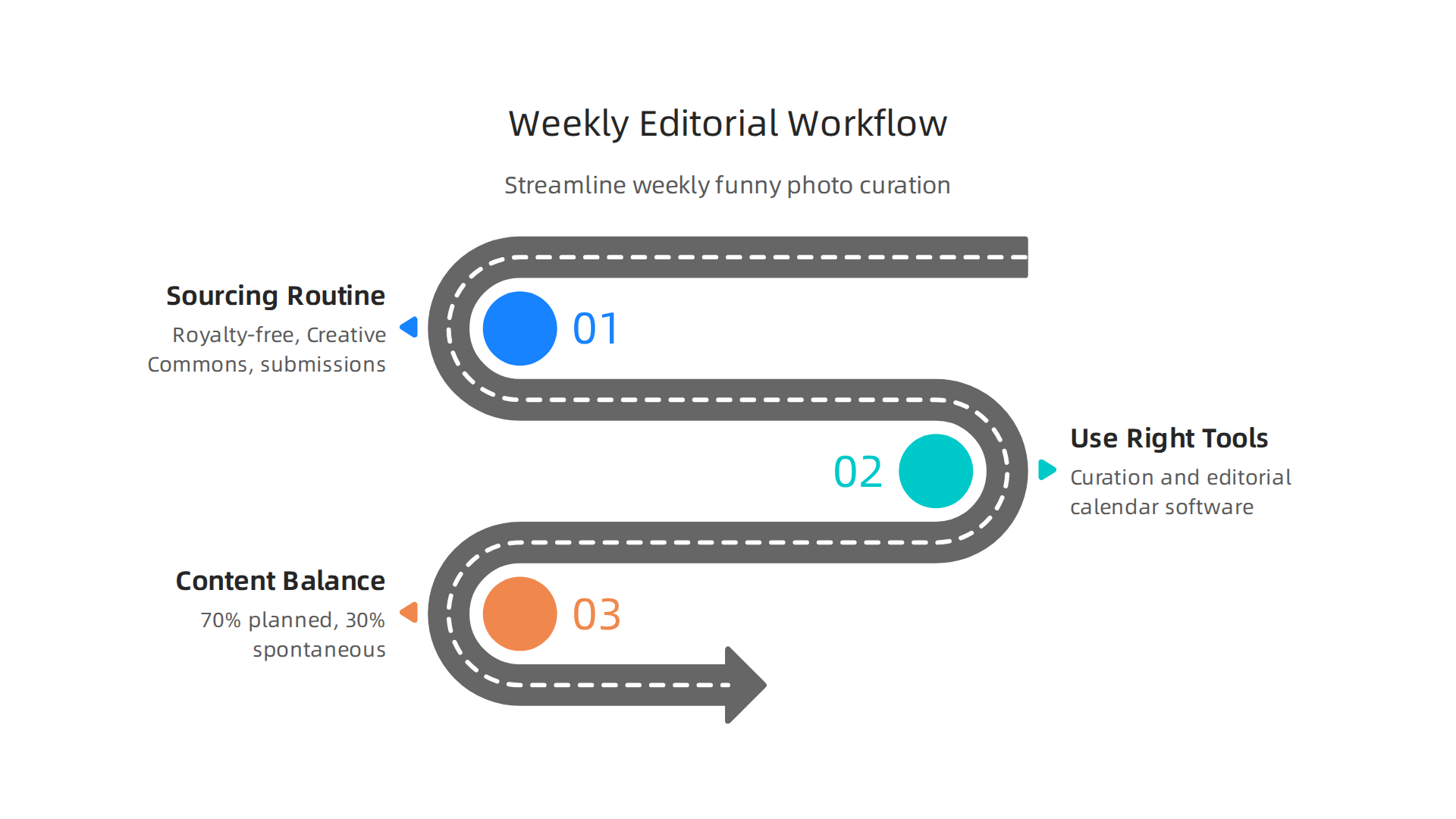
Start by finding places that give you safe, reusable content. Royalty free libraries. Creative Commons archives. Direct submissions from creators. You want funny animal videos and photos that you actually have permission to use. Set aside 30 minutes each week to hunt for new material. Save the best ones in a folder or a content library.
Use the Right Tools
Tools make this whole process easier. Instead of doing everything manually, use a content curation tool to find trending funny photos and track where they came from. A good curation tool helps with sourcing, attribution, and rights tracking all in one place. You can check out this list of best content curation tools in 2026 to see what fits your workflow.
Once you have your content picked, you need an editorial calendar to schedule everything. A calendar helps you see the week at a glance. You can plan a "Try Not to Laugh" challenge on Tuesday and a wholesome animal story on Thursday. Some of the best content calendar software in 2026 let you drag and drop posts, add notes about rights, and even auto schedule.
Balance Planned Posts with Trending Humor
Here is the thing. You cannot script every laugh. Some of the best funny photos come from real time moments. A weird news story. A viral sound clip. Surreal humour is having a big moment right now. Absurdist comedy based on strange situations is popping up everywhere. To understand this style, you can read about surreal humour on Wikipedia. It works because it surprises people.
Your editorial calendar should leave blank spots for these trends. Maybe 70% planned content and 30% spontaneous. That way you always have something ready for a trending topic without scrambling.
For more ideas on how humor techniques strengthen your content strategy, take a look at how the Madea movies content strategy wins over intellectual audiences. It shows how even scripted comedy can feel fresh and engaging.
Try a Little Absurdity Yourself
If you want to test surreal or absurdist humor in your own posts, start small. A weird caption. A photo that breaks logic. You can find plenty of inspiration in content that turns strange ideas into clever comedy. Check out this series for absurd humor fans and see how weird gets smart.
A little system, a few tools, and a willingness to be silly. That is all you need to keep your weekly funny photo editorial running smooth.
Measuring Impact: Analytics for Humor-Based Content
So you posted a funny cat video and it got a ton of likes. Does that mean it worked? Not necessarily. Standard metrics like views and likes tell you people saw your content.

But they do not tell you if your humor actually changed how people feel about your brand. That is a much bigger deal.
The science of social media engagement in 2026 shows that real connection goes beyond surface numbers. Research on social media engagement reveals that meaningful interactions matter more than raw views. So you need to look deeper.
Look Beyond the Like Button
Start tracking these three things instead:
- Shares and saves. When someone shares your funny photos, they are vouching for you. A save means they want to come back. These actions show trust.
- Comment sentiment. Are people laughing? Or are they confused? A funny post should spark positive reactions. A study of how young audiences engage with media found that emotional tone in comments directly affects how others perceive the content.
- Brand recall uplift. Do people remember who posted the joke? You can measure this with simple surveys. Send a follow up question to your audience: "Where did you see this funny photo last week?"
The U-Shaped Engagement Curve
Here is a pattern that works well for humor. Successful funny content often shows a U-shaped engagement curve. You get an early spike right after posting. People laugh, they share, they tag friends. Then things quiet down. But later, you see another bump. People come back to the post. They discuss it. They reference it.
This two-stage pattern means your humor landed. Real-time engagement on social media platforms now plays a big role in shaping how content spreads over time. The initial laugh is good. The sustained discussion is gold.
Test Everything with A/B Testing
You want clear proof that your humor strategy works. Run an A/B test. Post the same message twice. Once with a funny photo. Once without. Compare the results.
Look at click-through rates, time spent on page, and conversion numbers. The data gives you hard evidence to show stakeholders. A brand that masters this approach can turn smart absurdity into a powerful content strategy. For example, understanding how Madea movies win over intellectual audiences shows how scripted humor can drive real business results.
If you want to test absurd humor in your own content, start with small experiments. A weird caption. A strange photo. Track what happens. For fans of witty chaos and smart comedy, Try Smarter Absurdity offers a great next step.
Measure the right things. And let your data prove what your funny photos can do.
Summary
This guide explains how to find, use, and measure original funny photos and short-form videos so your brand can cut through social noise with absurdist, well-crafted humor. It covers why humor triggers memory and sharing, where to source unique material (independent artists, UGC, AI tools), and the legal rules you must follow to avoid copyright risk. You’ll learn how to match tone to audience demographics and platform cultures, build a simple weekly curation workflow, and balance planned posts with timely trends. The article also shows practical steps for licensing content, giving proper attribution, and running A/B tests to prove impact. By the end you’ll be able to source safer, more original comedic visuals, adapt them to each channel, and measure whether your funny posts actually strengthen brand recall and engagement.